Showing posts with label conferences-complexity. Show all posts

February 11, 2024

Charles Darwin meets Rube Goldberg: a tale of biological convolutedness


Charles Darwin studying a Rube Goldberg Machine (Freepik Generative AI, text-to-image)

For this Darwin Day post (2024), I will discuss the paper Machinery of Biocomplexity [1]. This paper introduces the notion of Rube Goldberg machines as a way to explore biological complexity and non-optimal function. This concept was first highlighted on Synthetic Daises in 2009 [2], while an earlier version of the paper was discussed on Synthetic Daisies in 2013 [3]. The paper was revised in 2014 to include a number of more advanced computational concepts, after a talk to the Network Frontiers Workshop at Northwestern University in 2013 [4]. 

Figure 1. Block and arrow model of a biological RGM (bRGM) that captures the non-optimal changes resulting from greater complexity. Mutation/Co-option removes the connection between A and B, then establishes a new set of connection with D. Inversion (bottom) flips the direction of connections between C-B and C-A, while also removing the output. This results in the addition of E and D which reestablishes the output in a circuitous manner.

Biological Rube Goldberg Machines (bRGNs) are defined as a computational abstraction of convoluted, non-optimal mechanisms. Non-optimal biological systems are represented using flexible Markovian box and arrow models that can be mutated and expanded given functional imperatives [5]. Non-optimality is captured through the principle of "maximum intermediate steps": biological systems such as neural pathways, metabolic reactions, and serial interactions do not evolve to the shortest route but is constrained (and perhaps even converge to) the largest number of steps. This results in a set of biological traits that functionally emerge as a biological process. Figure 1B shows an example where maximal steps represents a balance between the path of least resistance and exploration given constraints on possible interconnections [6]. The paths from A-E, E-B, and C-D are the paths of least resistance given the constraints of structure and function. In the sense that optimality is a practical outcome of physiological function, a great degree of intermediacy can preserve unconventional pathways that are utilized only spontaneously.

This can be seen in a wide variety of biological systems and is a consequence of evolution. Evolutionary exaptation, the evolution of alternative functions, and serial innovation all result in systems with a large number of steps from input to output. But sometimes convolution is the evolutionary imperative in and of itself. As fitness criteria change over evolutionary time, traces of these historical trajectories can be observed in redundant pathways and other results of subsequent evolutionary neutrality. One example from the paper involves a multiscale model (genotype-to-phenotype) that exploits both tree depth and lateral connectivity to maximize innovation in the production of a phenotype (Figure 2). While our models are based on connections between discrete states, bRGMs can also provide insight into the evolution of looser collections of single traits and even networks, where the sequence of function is bidirectional and hard to follow in stepwise fashion.

Figure 2.  A hypothetical biological RGM representing a multi-scale relationship. Each set of elements (A-F) represents the number of elements at each scale (actual and potential connections are shown with bold and thin lines, respectively). Examples of convolutedness incorporate both loops (as with E5,1 and E5,5) and the depth of the entire network.

The paper also features extensions of the basic bRGM, including massively convoluted architectures and microfluidic implementations. In the former, interconnected networks represent systems that are not only maximal in terms of size or length, but also massively topologically complex [7]. One example of this is cortical folding and the resulting neuronal connectivity in Mammalian brains. The latter example is based on fluid dynamics and combinatorial architectures that are more in line with discrete bRGMs (Figure 3). 

Figure 3. A microfluidic-inspired bRGM model that mimics the complexity of biological fluid dynamics (e.g. blood vessel networks). G1, G2, and G3 represent iterations of the system.


References:

[1] Alicea, B. (2014). The "Machinery" of Biocomplexity: understanding non-optimal architectures in biological systems. arXiv, 1104.3559.

[2] Non-razors, unite! January 30, 2009. https://syntheticdaisies.blogspot.com/2009/01/non-razors-unite.html

[3] Maps, Models, and Concepts: July Edition. Synthetic Daises blog. July 13, 2013. https://syntheticdaisies.blogspot.com/2013/07/maps-models-and-concepts-july-edition.html

[4] Inspired by a visit to the Network's Frontier....  Synthetic Daises blog. December 16, 2013. https://syntheticdaisies.blogspot.com/2013/12/fireside-science-inspired-by-visit-to.html

[5] when dealing with a large number of steps or in a polygenic context, these types of models can also resemble renormalization groups. For more on renormalization group, please see: Wilson, K.G. (1975). Renormalization group methods. Advances in Mathematics, 16(2), 170-186.

[6] this balance is as predicted by Constructive Neutral Evolution (CNE). For a relevant paper, please see: Gray et.al (2010). Irremediable Complexity? Science, 330(6006), 920-921.

[7] in the paper, this is referred to as Spaghettification, a term borrowed from the physics of gravitation. See this reference for an interesting implementation of this in soft materials:  Bonamassa et.al (2024). Bundling by volume exclusion in non-equilibrium spaghetti. arXiv, 2401.02579.

June 4, 2021

Dispatches from the Emergent Interaction Workshop

 This content has been cross-posted at the Orthogonal Lab Medium.


Last month, the Orthogonal Lab was represented at the Emergent Interaction Workshop (part of SIGCHI 2021). We contributed a paper titled “Allostasis Machines: a model for understanding internal states and technological environments”, with a companion presentation now on YouTube. Thanks go to Bradly Alicea, Daniela Cialfi, Anson Lim, and Jesse Parent for their contribution. We are planning an expanded version of this work with Rishabh Chakraborty that will demonstrate Allostasis Machines as a Reinforcement Learning implementation.

The subtitle of this workshop was “Complexity, Dynamics, and Enaction in HCI”. Therefore, the focus was on advancing measurement and theory, in addition to better characterize complexity in the field of Human-Computer Interaction. The four-hour long session was summarized in our weekly meeting on May 22. I have also provided supplemental readings in four workshop-related categories at the bottom of this post.

Overview of the Emergent Interaction Miro board.

There were six other papers made available before the session. Two of the most interesting to the Orthogonal Lab group are “Fields of Affordances and Human Computer Interaction” by Jelle Bruineberg and “Simulating Social Acceptability With Agent-based Modeling” by Alarith Uhde and Marc Hassenzahl.

The Emergent Interaction utilized Zoom, Slack, and a Miro board to enable discussion during the session. Check out the overview paper titled “Emergent Interaction: Complexity, Dynamics, and Enaction in HCI” for more information.

Testing, 1, 2, Emergent T-shirt….

There were a number of interesting and innovative topics discussed in the workshop. Dynamical approaches came up several times, along with topics such as multifractality, attractor analysis, and co-evolutionary experimental design. For more information regarding the first two topics, check out Alan Dix’s blog on Making Sense of Quantitative Data, and Dan Bennett’s preprint “Multifractal Mice: Measuring Task Engagement and Readiness-to-hand via Hand Movement”.

Tom Froese presented on his Enactive Artificial Intelligence and HCI work. His Google Scholar profile features some really interesting work that cuts across the worlds of Artificial Life, Cybernetics, and Cognitive Science, but his workshop topic was how modern Machine Learning approaches are insufficiently embodied. I have posted references to two of his key works (workshop-wise) in the Further Readings section of this post.

Later, Parisa Eslambolchilar presented on first-order closed-loop feedback taking the form of sensor-based human interaction loops. She reviewed some of the things she developed in her Doctoral dissertation, then lead us into her more recent work. Learn more by reading “A Model-Based Approach to Analysis and Calibration of Sensor-based Human Interaction Loops”.

Then, Vassilis Kostakos discussed his work on modeling interactions between technology users (or users and interfaces) as a complex system. He utilized the “lynx-hare” predator-prey analogy, inspired by Lotka-Volterra co-evolutionary dynamics. Read more in this paper published last year in Human-Computer Interaction: “Modeling interaction as a complex system”.

Emergent Interaction is now on Twitter! Give them a follow to join the discussion.

Further Reading: Measurement techniques.

Rebout, N., Lone, J-C., De Marco, A., Cozzolino, R., Lemasson, A., and Thierry, B. (2021). Measuring complexity in organisms and organizations. Royal Society Open Science, 8, 200895.

Zhou, Q., Chua, C-C., Knibbe, J., Goncalves, J., and Velloso, E. (2021). Dance and Choreography in HCI: A Two-Decade RetrospectiveProceedings of CHI, 262, 1–14. Video

Further Reading: Enactive Approaches to Artificial Systems.

Froese, T. and Ziemke, T. (2009). Enactive artificial intelligence: Investigating the systemic organization of life and mindArtificial Intelligence, 173, 466–500.

Froese, T., McGann, M., Bigge, W., Spiers, A., and Seth, A.K. (2012). The Enactive Torch: A New Tool for the Science of PerceptionIEEE Transactions on Haptics, 5(4), 365–375.

Further Reading: Agent-based Modeling approaches.

Bonabeau, E. (2002). Agent-based modeling: Methods and techniques for
simulating human systems
PNAS, 99(3), 7280–7287.

Grimm, V., Revilla, E., Berger, U., Jeltsch, F., Mooij, W.M., Railsback, S.F., Thulke, H-H., Weiner, J., Wiegand, T., and DeAngelis, D.L. (2005).
Pattern-Oriented Modeling of Agent-Based Complex Systems: Lessons from EcologyScience, 310, 987.

Further Reading: Criticalities and Characterizing Systems.

Dotov, D.G., Nie, L., and Chemero, A. (2010). A Demonstration of the Transition from Ready-to-Hand to Unready-to-HandPLoS One, 5(3), e9433.

Kelso, J.A.S. (2021). Unifying Large-and Small-Scale Theories of CoordinationEntropy, 23(5), 537.

May 26, 2016

Rectified and Ramifying Representations for the Purpose of Theoretical Expediency

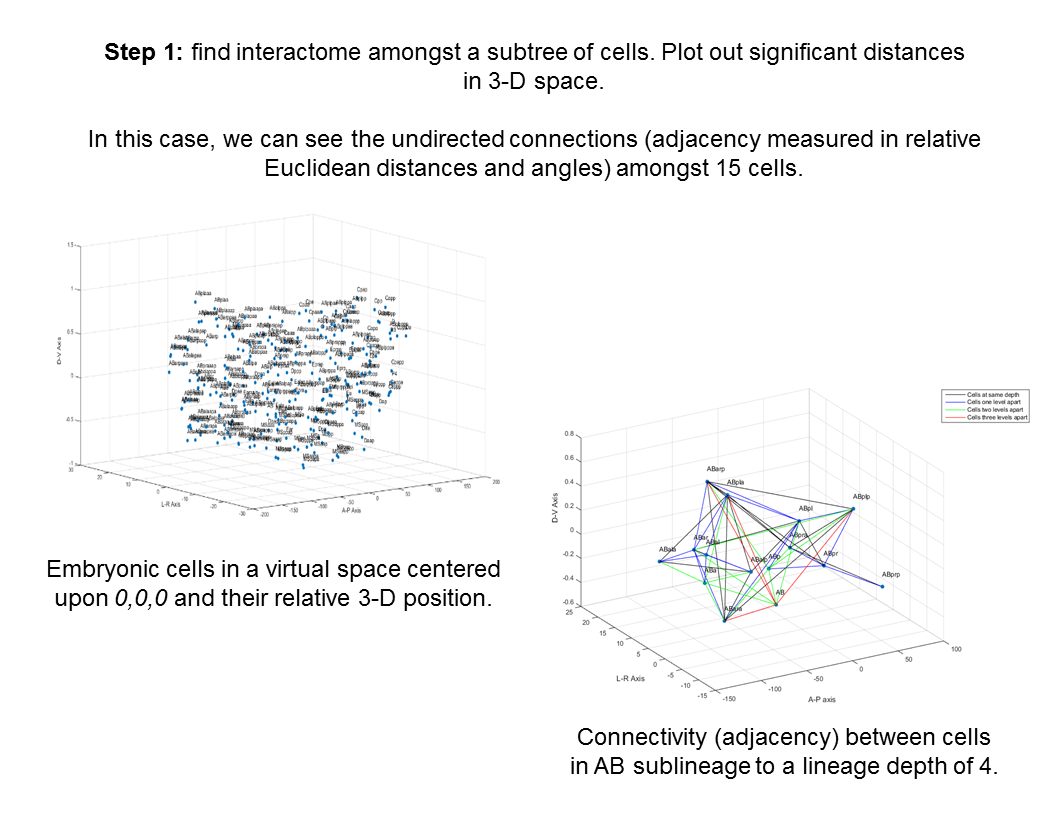
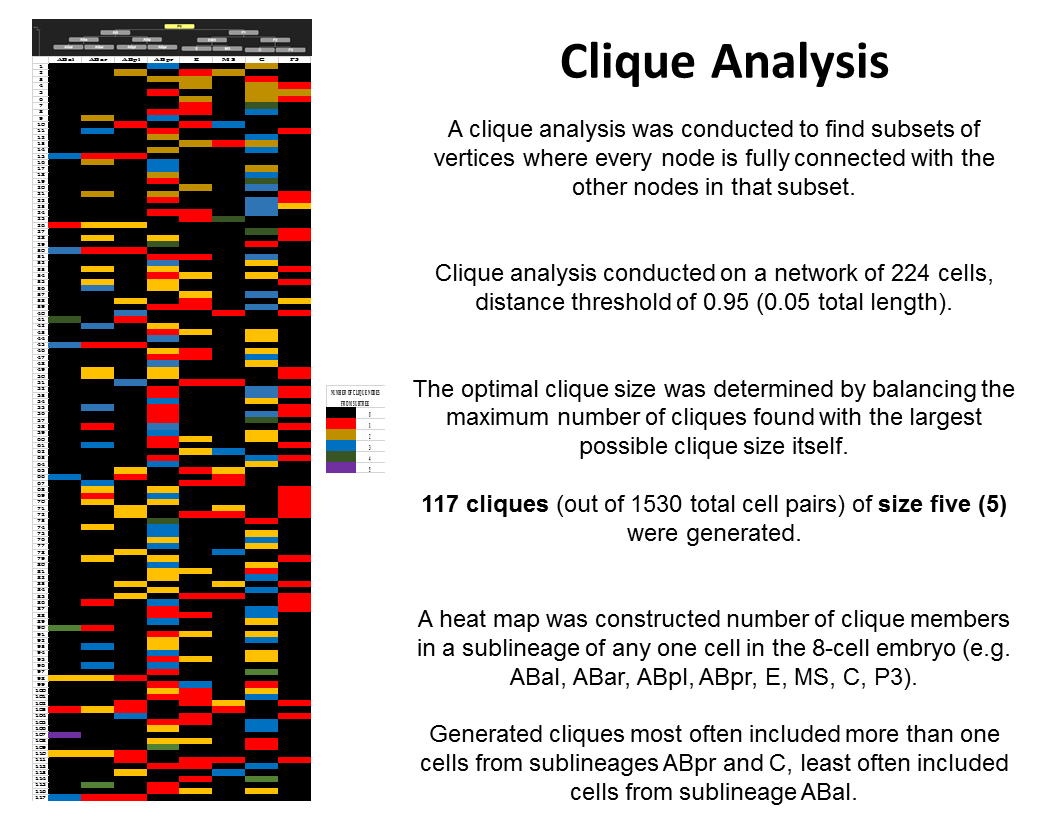
One aim of the DevoWorm project is to take a tree structure (in this case a cell lineage tree from an embryo) and extract distributed structural information. This is done to find previously undiscovered patterns in early development (embryogenesis). One way in which this can be accomplished is by building undirected complex networks to represent the relationships between three-dimensional cellular position in a point model of the embryo. Indeed, rather than a branching tree, we are left with a much larger tree with a significant number of cycles. This allows us to examine previously undiscovered interactions between cells based on proximity (such as juxtacrine and paracrine signalling).

A tree with a cycle, indeed. Popular meme or research problem?

Now these ideas have been made concrete in the form of a poster and presentation that describe the methodology and results of representing approximations of cell nuclei in the embryo as a connected network. This work has been featured at the Network Frontiers Workshop (Northwestern University) and the Midwest Regenerative Medicine Meeting (Washington University, St. Louis). Here is the poster in slide form:


Notice how this approach is both geometrically vivid and extensible to different modes of development. The graphs and statistics were rendered in Gephi, and other computation was done in MATLAB and R. Our next steps include developing customized modules in Gephi for drawing differentiation trees, developing hybrid directed acyclic graph (DAG)/undirected network graph structures, and refining the network construction methodology.

We are also working on a methodology called the scalable interactome, which simply involves using graphs to visualize and extract information at multiple spatial and temporal scales. One current example of this is OneZoom explorer, which renders the tree of life in a fractal manner. This can be extended to exploring the fractal and complex geometric nature of the embryo itself.


A slightly different view of human evolution and rejection of human exceptionalism. COURTESY: OneZoom Tree of Life.

"Miscellaneous Polyhedra" by Carol Branch (no pun intended).


With that nod to complexity, I would be remiss if I did not mention the old SimCity dictum? A gratuitous image of fractals and reference to a Wil Wright easter egg is the perfect way to end this post. 

December 16, 2013

Fireside Science: Inspired by a visit to the Network's Frontier....

This post has been cross-posted to Fireside Science.


Recently, I attended the Network Frontiers Workshop at Northwestern University in Evanston, IL. This was a three-day session in which researchers engaged in network science from around the world gathered to present their work. They also came from many home disciplines, including computational biology, applied math and physics, economics and finance, neuroscience, and more.


The schedule (all researcher names and talk titles) can be found here. I was among one of the first presenters on the first day, presenting “From Switches to Convolution to Tangled Webs” [1], which involves network science from a evolutionary systems biology perspective.


One Field, Many Antecedents
For many people who have a passing familiarity with network science, it may not be clear as to how people from so many disciplines can come together around a single theme. Unlike more conventional (e.g. causal) approaches to science, network (or hairball) science is all about finding the interactions between the objects of analysis. Network science is the large-scale application of graph theory to complex systems and ever-bigger datasets. These data can come from social media platforms, high-throughput biological experiments, and observations of statistical mechanics. 

The visual definition of a scientific "hairball". This is not causal at all.....

25,000 foot View of Network Science
But what does a network science analysis look like? To illustrate, I will use an example familiar to many internet users. Think of a social network with many contacts. The network consists of nodes (e.g. friends) and edges (e.g. connections) [2]. Although there may be causal phenomena in the network (e.g. influence, transmission), the structure of the network is determined by correlative factors. If two individuals interact in some way, this increases the correlation between the nodes they represent. This gives us a web of connections in which the connectivity can range from random to highly-ordered, and the structure can range from homogeneous to heterogeneous.

Friend data from my Facebook account, represented as a sizable (N=64) heterogeneous network. COURTESY: Wolfram|Alpha Facebook app.

Continuing with the social network example, you may be familiar with the notion of “six degrees of separation” [3].  This describes one aspect (e.g. something that enables nth-order connectivity) of the structure inherent in complex networks. Again consider the social network: if there are preferences for who contacts whom, a randomly-connected network results. The path between any two individuals in such a network is generally high, as there are no reliable short-cuts. This path across the network is also known as the network diameter, and is an important feature of a network's topology.

Example of a social network. This example is homogeneous, but with highly-regular structure (e.g. non-random). 

Let us further assume that in the same network, there happen to be strong preferences for inter-node communication, which leads to changes in connectivity. In such cases, we get connectivity patterns that range from scale-free [4] to small-world [5]. In social networks, small-world networks have been implicated in the “six degrees” phenomenon, as the path between any two individuals is much shorter than in the random case. Scale-free and especially small-world networks have a heterogeneous structure, which can include local subnetworks (e.g. modules or communities) and small subpopulations of nodes with many more connections than other nodes (e.g. network hubs). Statistically, heterogeneity can be determined using a number of measures, including betweenness centrality and network diameter.

Example of a small-world network, in the scheme of things. 

Emerging Themes
While this example was made using a social network, the basic methodological and statistical approach can be applied to any system of strongly-interacting agents that can provide a correlation structure [6]. For example, high-throughput measurements of gene expression can be used to form a gene-gene interaction network. Genes that correlate with each other (above a pre-determined threshold) are consider connected in a first-order manner. The connections, while indirectly observed, can be statistically robust and validated via experimentation. And since all assayed genes (or the order of 103 genes) are likewise connected, second and third-order connections are also possible. The topology of a given gene-gene interaction network may be informative about the general effects of knockout experiments, environmental perturbations, and more [7].

This combination of exploratory and predictive power is just one reason why the network approach has been applied to many disciplines, and has even formed a discipline in and of itself [8]. At the Network Frontiers Workshop, the talks tended to coalesce around several themes that define potential future directions for this new field. These include:

A) general mechanisms: there are a number of mechanisms that allow for the network to adaptively change, stay the same in the face of pressure to change, or function in some way. These mechanisms include robustness, the identification of switches and oscillators, and the emergence of self-organized criticality among the interacting nodes. Papers representing this theme may be found in [9].

The anatomy of a forest fire's spread, from a network perspective.

B) nestedness, community detection, and clustering: Along with the concept of core-periphery organization, these properties may or may not exist in a heterogeneous network. But such techniques allow us to partition a network into subnetworks (modules) that may operate with a certain degree of independence. Papers representing this theme may be found in [10].

C) multilevel networks: even in the case of social networks, each "node" can represent a number of parallel processes. For example, while a single organism possesses both a genotype and a phenotype, the correlational structure for genotypic and phenotypic interactions may not always be identical. To solve this problem, a bipartite (two independent) graph structure may be used to represent different properties of the population of interest. While this is just a simple example, multilevel networks have been used creatively to attack a number of problems [11].

D) cascades, contagions: the diffusion of information in a network can be described in a number of ways. While the common metaphor of "spreading" may be sufficient in homogeneous networks, it may be insufficient to describe more complex processes. Cascades occur when transmission is sustained beyond first-order interactions. In a social network, messages that gets passed to a friend of a friend of a friend (e.g. third-order interactions) illustrate the potential of the network topology to enable cascade. Papers representing this theme may be found in [12].

E) hybrid models: as my talk demonstrates, the power and potential of complex networks can be extended to other models. For example, the theoretical "nodes" in a complex network can be represented as dynamic entities. Aside from real-world data, this can be achieved using point processes, genetic algorithms, or cellular automata. One theme I detected in some of the talks was the potential for a game-theoretic approach, while others involved using Google searches and social media activity to predict markets and disease outbreaks [13].

Here is a map of connectivity across three social media platforms: Facebook, Twitter, and Mashable. COURTESY: Figure 13 in [14].

NOTES:
[1] Here is the abstract and presentation. The talk centered around a convolution architecture, my term for a small-scale physical flow diagram that can be evolved to yield not-so-efficient (e.g. sub-optimal) biological processes. These architectures can be embedded into large, more complex networks as subnetworks (in a manner analogous to functional modules in gene-gene interaction or gene regulatory networks).

One person at the conference noted that this had strong parallels with the book “Plausibility of Life” (excerpts here) by Marc Kirschner and John Gerhart. Indeed, this book served as inspiration for the original paper and current talk.

[2] In practice, "nodes" can represent anything discrete, from people to cities to genes and proteins. For an example from brain science, please see: Stanley, M.L., Moussa, M.N., Paolini, B.M., Lyday, R.G., Burdette, J.H. and Laurienti, P.J.   Defining nodes in complex brain networks. Frontiers in Computational Neuroscience, doi:10.3389/fncom.2013.00169 (2013).

[3] the "six degrees" idea is based on an experiment conducted by Stanley Milgram, in which he sent out and tracked the progression of a series of chain letters through the US Mail system (a social network). 

The potential power of this phenomenon (the opportunity to identify and exploit weak ties in a network) was advanced by the sociologist Mark Granovetter: Granovetter, M.   The Strength of Weak Ties: A Network Theory Revisited. Sociological Theory, 1, 201–233 (1983).

The small-world network topology (the Watts-Strogatz model), which embodies the "six degrees" principle, was proposed in the following paper: Watts, D. J. and Strogatz, S. H.   Collective dynamics of 'small-world' networks. Nature, 393(6684), 440–442 (1998).

[4] Scale-free networks can be defined as a network with no characteristic number of connections across all nodes. Connectivity tends to scale with growth in the number of nodes and/or edges. Whereas connectivity in a random network can be characterized using a Gaussian (e.g. normal) distribution, connectivity in a scale-free network can be characterized using a Power Law (e.g. exponential) distribution.

[5] Small-world networks are defined by their hierarchical (e.g. strongly heterogeneous) structure and a short path length across the network. This is a special case of the more general scale-free pattern, and can be characterized with a strong power law (e.g. the distribution has a thicker tail). Because any one node can reach any other node in a relatively small number of steps, there are a number of organizational consequences to this type of configuration.

[6] Here are two foundational papers on network science [a, b] enlightening primers on complexity and network science [c, d]:
[a] Albert, R. and Barabasi, A-L.   Statistical mechanics of complex networks. Reviews in Modern Physics, 74, 47–97 (2002).

[b] Newman, M.E.J.   The structure and function of complex networks. SIAM Review, 45, 167–256 (2003).

[c] Shalizi, C.   Community Discovery Methods for Complex Networks. Cosma Shalizi's Notebooks - Center for the Study of Complex Systems, July 12 (2013).

[d] Voytek, B.   Non-linear Systems. Oscillatory Thoughts blog, June 28 (2013).

[7] For an example, please see: Cornelius, S.P., Kath, W.L., and Motter, A.E.   Controlling complex networks with compensatory perturbations. arXiv:1105.3726 (2011).

[8] Guimera, R., Uzzi, B., Spiro, J., and Amaral, L.A.N   Team Assembly Mechanisms Determine Collaboration Network Structure and Team Performance. Science, 308, 697 (2005).

[9] References for general mechanisms (e.g. switches and oscillators):
[a] Taylor, D., Fertig, E.J., and Restrepo, J.G.   Dynamics in hybrid complex systems of switches and oscillators. Chaos, 23, 033142 (2013).

[b] Malamud, B.D., Morein, G., and Turcotte, D.L.   Forest Fires: an example of self-organized critical behavior. Science, 281, 1840-1842 (1998).

[c] Ellens, W. and Kooij, R.E.   Graph measures and network robustness. arXiv: 1311.5064 (2013).

[d] Francis, M.R. and Fertig, E.J.   Quantifying the dynamics of coupled networks of switches and oscillators. PLoS One, 7(1), e29497 (2012).

[10] References for clustering [a], community detection [b-e], core-periphery structure detection [f], and nestedness [g]:
[a] Malik, N. and Mucha, P.J.   Role of social environment and social clustering in spread of opinions in co-evolving networks. Chaos, 23, 043123 (2013).

[b] Rosvall, M. and Bergstrom, C.T.   Maps of random walks on complex networks reveal community structure. PNAS, 105(4), 1118-1123 (2008).


* the image above was taken from Figure 3 of [a]. In [a], an information-theoretic approach to discovering network communities (or subgroups) is introduced.

[c] Colizza, V., Pastor-Satorras, R. and Vespignani, A.   Reaction–diffusion processes and metapopulation models in heterogeneous networks. Nature Physics, 3, 276-282 (2007).

[d] Bassett, D.S., Porter, M.A., Wymbs, N.F., Grafton, S.T., Carlson, J.M., and Mucha, P.J.   Robust detection of dynamic community structure in networks. Chaos, 23, 013142 (2013).

* the authors characterize the dynamic properties of temporal networks using methods such as optimization variance and randomization variance.

[e] Nishikawa, T. and Motter, A.E.   Discovering network structure beyond communities, Scientific Reports, 1, 151 (2011).

[f] Bassett, D.S., Wymbs, N.F., Rombach, M.P., Porter, M.A., Mucha, P.J., and Grafton,
S.T.   Task-Based Core-Periphery Organization of Human Brain Dynamics. PLoS Computational Biology, 9(9), e1003171 (2013).

* a good exampkle of how core-periphery structure is extracted from brain networks constructed from fMRI data.

[g] Staniczenko, P.P.A., Kopp, J.C., and Allesina, S.   The ghost of nestedness on ecological networks. Nature Communications, doi:10.1038/ncomms2422 (2012).

[11] References for multilevel networks:
[a] Szell, M., Lambiotte, R., Thurner, S.   Multirelational organization of large-scale social networks in an online world. PNAS, doi/10.1073/pnas.1004008107 (2010).

[b] Ahn, Y-Y., Bagrow, J.P., and Lehmann, S.   Link communities reveal multiscale complexity in networks. Nature, 466, 761-764 (2010).

[12] References for cascades and contagions:
[a] Centola, D.   The Spread of Behavior in an Online Social Network Experiment. Science, 329, 1194-1197 (2010).

[b] Brummitt, C.D., D’Souza, R.M., and Leicht, E.A.   Suppressing cascades of load in interdependent networks. PNAS, doi:10.1073/pnas.1110586109 (2011).

[c] Brockmann, D. and Helbing, D.   The Hidden Geometry of Complex, Network-Driven Contagion Phenomena. Science, 342(6164), 1337-1342 (2013).

[d] Glasserman, P. and Young, H.P.   How Likely is Contagion in Financial Networks? Oxford University Department of Economics Discussion Papers, #642 (2013).

[13] Reference for hybrid networks and other themes, including network evolution [a,b] and the use of big data in network analysis [c,d]:
[a] Pang, T.Y. and Maslov, S.   Universal distribution of component frequencies in biological and technological systems. PNAS, doi:10.1073/pnas.1217795110 (2012).

[b] Bassett, D.S., Wymbs, N.F., Porter, M.A., Mucha, P.J., and Grafton, S.T.   Cross-Linked Structure of Network Evolution. arXiv: 1306.5479 (2013).

[c] Ginsberg, J., Mohebbi, M.H., Patel, R.S., Brammer, L., Smolinski, M.S., and Brilliant, L.   Detecting influenza epidemics using search engine query data. Nature, 457, 1012–1014 (2008).

[d] Michel, J-B., Shen, Y.K., Aiden, A.P., Veres, A., Gray, M.K., Google Books Team, Pickett, J.P., Hoiberg, D., Clancy, D., Norvig, P., Orwant, J., Pinker, S., Nowak, M.A., Aiden, E.L.   Quantitative Analysis of Culture Using Millions of Digitized Books. Science, 331(6014), 176-182 (2011).

[14] Ferrara, E.   A large-scale community structure analysis in Facebook. EPJ Data Science, 1:9 (2012).

November 30, 2013

New Papers, Old Papers, and Re-convolved Concepts, November edition

I have been busy the past several months fleshing out new ideas and finishing up older ones. The first paper profiled here is "Cellular decision-making bias: the missing ingredient in cell functional diversity", something I published on arXiv [1] last month. This paper is a computational-oriented derivative of the paper "Defining phenotypic respecification diversity using multiple cell lines and reprogramming regimens", published earlier this year in Stem Cells and Development [2].


In [2], it was demonstrated that a series of different cell lines of the same type (e.g. fibroblast) exhibit great variability (many-fold differences) in terms of their direct cellular reprogramming efficiency. The efficiency of this process was measured using phenotypic (e.g. immunocytochemical) assays. This may or may not be due to the underlying genomic processes. Using a limited set of assays analyzed by means of differential gene expression, no smoking gun was found. While we did not investigate candidate epigenetic markers, the phenotypic trend was nevertheless consistent for both human and mouse cells reprogrammed to both generic muscle fiber and generic dopaminergic neurons [3].


The data collected and analyzed here also sets up a series of computational investigations using a method derived from Signal Detection Theory (SDT) and other signal-to-noise characterization methods [4]. SDT is generally used to understand cognitive decision-making in humans and animals. However, decision-making theory has also been used to explain outcomes at the cellular and molecular level, particularly switch-like processes [5]. Using the standard SDT as inspiration, I propose in [1] that cellular and molecular processes can be characterized and analyzed using a technique called cellular SDT.


Major collaborator on the Stem Cells and Development paper [2]: Dr. Steven Suhr, Michigan State University. 

Cellular SDT can uncover something called decision-making bias, which is hypothesized to occur during the conversion of cells from one phenotype to another [3]. In this case, the term bias refers to the magnitude of difference in conversion efficiency for the same cell line given two distinct stimuli. The overarching assumption is that differences observed across different small-scale stimuli (e.g. forced transcription factor activity) can be characterized systematically within and between specific cell types and lines.

My talk to the BEACON Center in May 2013. The first part (YouTube video) focused on modeling diversity in cellular reprogramming (an early version of cellular decision-making bias).

Here is the abstract of the paper. Associated code (on Github) can be found here:
"Cell functional diversity is a significant determinant on how biological processes unfold. Most accounts of diversity involve a search for sequence or expression differences. Perhaps there are more subtle mechanisms at work. Using the metaphor of information processing and decision-making might provide a clearer view of these subtleties. Understanding adaptive and transformative processes (such as cellular reprogramming) as a series of simple decisions allows us to use a technique called cellular signal detection theory (cellular SDT) to detect potential bias in mechanisms that favor one outcome over another. We can apply method of detecting cellular reprogramming bias to cellular reprogramming and other complex molecular processes. To demonstrate the scope of this method, we will critically examine differences between cell phenotypes reprogrammed to muscle fiber and neuron phenotypes. In cases where the signature of phenotypic bias is cryptic, signatures of genomic bias (pre-existing and induced) may provide an alternative. The examination of these alternates will be explored using data from a series of fibroblast cell lines before cellular reprogramming (pre-existing) and differences between fractions of cellular RNA for individual genes after drug treatment (induced). In conclusion, the usefulness and limitations of this method and associated analogies will be discussed."


The second paper profiled here is called "A Semi-automated Peer-review System", a short paper I published on the arXiv earlier this month [6]. The idea of an automated peer review system came to me after preparing a blog post [7] and reading a paper on the most common degree of novelty found among highly influential scientific papers [8]. The paper provides an outline of a human-assisted adaptive algorithm that detects fraud in a set of scientific papers without also filtering out innovative but highly-novel work. As in the case in [1], the approach was based on signal detection theory (SDT). In this case, however, a more conventional application (e.g. standard ROC curves) is used to minimize the number of truly low quality and fraudulent manuscripts while maintaining diversity and novelty in the scientific literature.


Here is the abstract and here is the associated code (mostly pseudo-code) on Github:
"A semi-supervised model of peer review is introduced that is intended to overcome the bias and incompleteness of traditional peer review. Traditional approaches are reliant on human biases, while consensus decision-making is constrained by sparse information. Here, the architecture for one potential improvement (a semi-supervised, human-assisted classifier) to the traditional approach will be introduced and evaluated. To evaluate the potential advantages of such a system, hypothetical receiver operating characteristic (ROC) curves for both approaches will be assessed. This will provide more specific indications of how automation would be beneficial in the manuscript evaluation process. In conclusion, the implications for such a system on measurements of scientific impact and improving the quality of open submission repositories will be discussed". 

Finally, I am giving a presentation at the Network Frontiers Workshop at Northwestern University's NICO Institute on the 4th of December. The title of the talk is "From Switches to Convolution to Tangled Webs: evolving sub-optimal, subtle biological mechanisms". The work is an extension of my arXiv paper from 2011 [9] on Biological Rube Goldberg Machines (RGMs), something I also refer to as a convolution architecture. Here is the abstract and here is the associated code on Github:
"One way to understand complexity in biological networks is to isolate simple motifs like switches and bi-fans. However, this does not fully capture the outcomes of evolutionary processes. In this talk, I will introduce a class of process model called convolution architectures. These models demonstrate bricolage and ad-hoc formation of new mechanisms atop existing complexity. Unlike simple motifs (e.g. straightforward mechanisms), these models are intended to demonstrate how evolution can produce complex processes that operate in a sub-optimal fashion. The concept of convolution architectures can be extended to complex network topologies. Simple convolution architectures with evolutionary constraints and subject to natural selection can produce step lengths that deviate from optimal expectation. When convolution architectures are represented as components of bidirectional complex network topologies, these circuitous paths should become “spaghetti-fied”, as they are not explicitly constrained by inputs and outputs. This may also allow for itinerant and cyclic self-regulation resembling chaotic dynamics. The use of complex network topologies also allows us to better understand how higher-level constraints (e.g. hub formation, modularity, preferential attachment) affect the evolution of sub-optimality and subtlety. Such embedded convolution architectures are also useful for modeling physiological, economic, and social complexity". 

And last but not least, a new preprint server has come online called BioRxiv. BioRxiv (administered by Cold Spring Harbor Laboratory) accepts manuscripts from a number of biological disciplines, from Bioinformatics to Molecular Biology to Zoology. I kicked things off in the Zoology category with an older manuscript (originally presented at a conference in 2006) entitled "Filling up the Tree: considering the self-organization of avian roosting behavior" [10]. However, for more theoretical and interdisciplinary work such as the paper in [11], I still plan on using arXiv.


NOTES:

[1] Alicea, B.   Cellular decision-making bias: the missing ingredient in cell functional diversity. arXiv repository, arXiv: 1310:8268 [q-bio.QM] (2013).

[2] Alicea, B., Murthy, S., Keaton, S.A., Cobbett, P., Cibelli, J.B., and Suhr, S.T.   Defining phenotypic
respecification diversity using multiple cell lines and reprogramming regimens. Stem Cells and Development, 22(19), 2641-2654 (2013).

[3]  In this example, conversion refers to direct cellular reprogramming technique (e.g. the creation of iPS cells) that result in the creation of induced neural cells (iNCs) and induced skeletal muscle cells (iSMCs). However, conversion could also refer to carcinogenesis or developmental processes.

Figure 1 from Alicea et.al (2013). Frames A-D, immunocytochemical characterization of iNCs and iSMCs. Frames E-H, diversity in reprogramming efficiency for a range of cell lines.

[4] Schultz, S.R.   Signal-to-noise ratio in neuroscience. Scholarpedia, 2(6), 2046 (2007).

[5] Balazsi, G., van Oudenaarden, A., and Collins, J.J.   Cellular Decision-Making and Biological Noise: From Microbes to Mammals. Cell, 144(6), 910–925 (2011). 

[6] Alicea, B.   A Semi-automated Peer-review System. arXiv: 1311.2504 [cs.DL, cs.HC, cs.SI, physics.soc-ph] (2013).

[7] Alicea, B.   The Novelty-Consensus Dampening.   Synthetic Daisies blog, October 22 (2013). 

[8] Uzzi, B., Mukherjee, S., Stringer, M., and Jones, B.   Atypical Combinations and Scientific Impact. Science, 342, 468-472 (2013).

[9] Alicea,  B.   The ‘Machinery’ of  Biocomplexity:  understanding  non-optimal  architectures  in biological systems. arXiv repository, arXiv: 1104.3559 [nlin.AO, q-bio.QM, q-bio.PE] (2011).

[10] Alicea, B.   Filling up the Tree: considering the self-organization of avian roosting behavior. bioRxiv, doi:10.1101/000349 (2013).

[11] Alicea, B.   The Emergence of Animal Social Complexity: theoretical and biobehavioral evidence. arXiv repository, arxiv:1309.7990 [q-bio.PR, q-bio.NC] (2013).

Printfriendly