Showing posts with label technology. Show all posts

February 20, 2026

10^6 All Time Pageviews: why all the attention?

"If I had a mutant strain for every misattributed quote on the internet, I'd have over a million mutant strains" -- Salvator Luria

Since the above quote is obviously misattributed, a trend that will no doubt get worse before it gets better [1], it's worth reflecting on how pageviews get counted and the workings of the attention economy.

As of February 10, Synthetic Daisies blog has 1,000,000 page views. One million! Ten to the sixth power! After 17 years, 1 month, and 16 days of posting, then not posting, and finally doing a lot of cross-posting, all while specializing in nothing. All the while not (as far as I know) having been mentioned in the Epstein files [2]. In fact, being skeptical of tech hype and dismayed by scientific racism. And with a nearly unbroken streak of Darwin Day posts since 2009, and many posts on science communication and open access. In terms of volume, this blog peaked in the 2012-2014 period and have declined since, as did a lot of science-oriented blogging enterprises.

In the past 2 years or so, there has been a great uptick in pageviews [3]. I am not sure why, although word on the light cycle trail is that most internet traffic is the product of automation. Nevertheless, a million pageviews of content is something of a milestone. Not least of which is that I can continue my pageview milestone/solar system metaphor. So here it is, "Synthetic Daisies blog" (a.k.a. Voyager 1) leaving the solar system.

As for the attention economy, it does seem that things with deep academic content do not get the numbers of views or followers that shallower content or (especially) conspiracy theories do [4]. In my mind, this is baked in: for YouTube content, this can be demonstrated. So much for monetization! Although revisiting an early post on the arcanocracy might address some of this.  

References:

[1] Garry et.al (2024). Large language models (LLMs) and the institutionalization of misinformation. Trends in Cognitive Science, 28(12), 1078-1088.

[2] a) apparently, this blog is officially run by a "loser", b) we really need to revisit the relationship between Epstein, John Brockman, Adam Bly, and the popular science of late 2000s vintage. I was a big fan of Seed Magazine and Edge.org, which were apparently edgy in more ways than one.  

[3] The 500,000 pageviews milestone was reached in December of 2022.

[4] While a lot of this is platform-dependent, some of this is affinity scam dependent. See Joe Rogan and his relationship with Spotify.

October 23, 2025

OA Week: The Troubling U-turn of Open Access


Who Owns Our Knowledge? Troubling trends have emerged.


As academics, media producers, and authors: Who Owns Our Knowledge? I present two troubling scenarios. Each of these have happened in the past few decades and is a heady mix of hypocrisy and gross power imbalance.


Intellectual Property Rights!

2006: RIAA Persecutes people for downloading music.


2013: Aaron Schwartz is persecuted for downloading JSTOR articles, resulting in his suicide.


2025: Technology companies use intellectual property without author permissions to train Large Language Models (LLMs). Everyone celebrates tech company profit margins, and LLMs can drive some people to suicide. 

Which of these things is not like the other? To be fair, the final example (in red text) is at the expense of legacy publishers and intellectual property laws. But that is the point. Intellectual property rights are enforced in ways that totally benefit the largest entity. 


Open Access to the.....logical endpoint?

Once upon a time, people were excited about radical open access. Post a preprint, post-peer review, and eliminate the bias of prestige journals. Now, it is the prestigious journals that enjoy Gold (!!) open access (for an exorbitant fee).


Although there are a number of options outside of this paradigm (e.g. Green Open Access), the goals of the open access reform movement seem to have become obscured. More specifically, the transition from words and slogans to institutional normalization has not been smooth.


So is the highlighted scenario the logical endpoint for open access? Probably not, but more work is needed. Not the easy work, but the harder work of changing systems and institutions.


That is all.


Can these scenarios be stopped? This is up to us.


January 17, 2020

Work With Me in 2020


The Google Summer of Code (GSoC) is once again accepting applications from students to work on a range of programming-oriented projects over the Summer of 2020. Orthogonal Research and Education Laboratory and the OpenWorm Foundation have contributed a number of projects to the list. Here are links to the project descriptions (login to INCF Neurostars required):


DevoWorm Group:

Project  #15: OpenDevoCell Integration

Orthogonal Laboratory:


I am the contact person for both the Orthogonal Laboratory and DevoWorm Group projects. If you have any questions about the application process or want to have be review your application before submission, please feel free do so. According to this year's schedule, the proposal deadline is March 31, and the community bonding period starts on April 27. Stay tuned!

Join us once again on the "Road to GSoC"!

December 16, 2018

TVoT (Television of Things)

Here is a feature of television-related items, and unlike the Internet of Things (IoT), these things has little hype behind them.

A few weeks ago (Novermber 22nd) was the 30th Anniversary of the Max Headroom intrusion on two Chicago television stations. The first intrusion was on WGN (Channel 9). A second intrusion occurred later that evening on WTTW (Channel 11). The original pirate broadcaster was never identified, and subsequent intrusions did not occur.


Shortwave radio carries a television signal! The high-pitched bleeps and buzzes in the background of a short-wave broadcast are actually data streams. Some of these sub-channels carry a series of images rendered at a low frame-rate, which produces a television broadcast of sequentially-scanned still images. This protocol is called slow-scan television (or SSTV) [1], and has its roots in the ham radio community. Modern uses include sending images to earth from the International Space Station [2]. 


If you don't know about mechanical television technology, it's your time to learn. Precursor to the much better-known electronic television, a number of early technologies enabled the reproduction of images by producing horizontal lines within a given image at a certain rate. The higher the scan rate, the faster individual images could be rendered, and the faster new images could replace the complete ones already rendered. Obtaining a higher scan rate meant that the images were more recognizable as a "moving" sequence. 

By and large, m
echanical generation was not commercially successful. Scan rates that would enable high-resolution images were never achieved. The Nipkow disc (invented in 1884) enabled animations based on a sequence of images on a rotating disc visualized using a light source and a Selenium element. The Baird televisor (developed during the 1920s) improved upon the Nipkow disc by transmitting the sequential images using a carrier signal. Like SSTV, there are limited uses for these technologies in the 21rst century, which include Steampunk-themed maker projects, digital light processing, and laser lighting displays (the latter two applications have relied upon significant technical advancements).


Lastly, there was an excellent recent episode of the Function podcast (hosted by Anil Dash) on the history of animated gifs. While it is now a 30-year old technology, animated gif are still an efficient way to present sequential movement and simple animation on the web. While animated gifs have been discussed on this blog in the past, the podcast discussion did mention that the first gif was 1987. So here is an image of the first gif (a flying plane) created by Steve Wilhite [3].


NOTES:
[1] A collection of readings can be found at the National Association for Amateur Radio website.


[2] Trapp C. (2017). Space Technology and Audio Tape to Store Art. Hackaday, December 14. SSTV signals commonly relay images to earth from the space station.

[3] Buck, S. (2012). History of GIFs. Mashable blog, October 19.

April 13, 2018

Video Game Complexity: a short overview

What inspired this post was both an interesting question from Twitter user @ID_AA_Carmack, CTO at Oculus VR and a long-suffering manuscript I have been trying to get into publication with some collaborators [1]. With reference to the former:


In the accompanying thread, someone mentioned that the classic game Tempest used a paddle controller, and therefore was an example of analogue control (and outside the scope of John's taxonomy). But in general, joystick and button-press control provide a measure of complexity for a wide variety of games.

Let's begin by highlighting a 2-bit game. Two examples of a 2-bit game (in terms of control) are Pong and Breakout. In both games, the player uses a single controller to move a virtual paddle back and forth across the screen [2].


A screenshot of Pong (left) and Breakout (right) and the degrees of freedom per player. Each degree of freedom (movement along the right-left axis) represents 2 bits of information.

Now let's discuss the mention of Joust as an example of  3-bit control and Pac-Man as an example of 4-bit control. For uninitiated readers, here are screen shots from the game (click to enlarge)


And here is a picture of the Joust arcade console and its 3 bit control mechanism.


The Joust joystick provides 2 bits of control (left on/off and right on/off), and the button is 1-bit of control (press or no press). This is sufficient complexity to control the action, but not enough complexity to account for all observed action in the game.

Pac-Man utilizes a maze rather than linear action, but has only one additional degree of control complexity. Here are some screenshots from the game (click to enlarge)


In terms of control complexity, Pac-Man is a 4-bit game (2 degrees of freedom), while the Atari 2600 controller can provide up to 5 bits of information (2 degrees of freedom and a button). These are arbitrary assessments of information content, and do not correspond with every possible degree of freedom in the game environment.


Examples of 4- and 5-bit control via joystick for a version of Pac-Man (left) and the Atari 2600 (right). 

There are two additional sources of complexity we should be concerned with: the combinatorial complexity of objects within the game, and perceptual complexity of human information processing during gameplay. The former can be characterized by computational complexity classes, while the latter can be characterized in conjunction with control complexity in the form of information bandwidth (measured in bits or bits per second).


A taxonomy of computational classes for Pac-Man and other games is described by [3-5]. While Pac-Man is considered an NP-hard game, not all video games are. Furthermore, games that are in the same computational class do not have the same types of objectives or in-game properties. The games Tetris [6] and Minesweeper [7] have been found to be NP-complete. This is likely based on the combinatorial properties of each game.

According to Aloupis et.al [8,9], Super Mario Brothers can be classified as NP-hard. Other Nintendo games, such as Donkey Kong Country, are PSPACE complete. The Nintendo examples are interesting from an approximation perspective, as several Nintendo games have been reclassified by this research group between 2012 and 2016 [8,10]. 

The criterion are based on things like how the avatar moves within the game's activities. A game like Pac-Man involves so-called "location traversal" [4], which in computational terms is similar to the travelling salesman problem (NP-hard) [3].  By contrast, a game like Breakout involves a balancing maneuver [see 2] that is solvable in LSPACE.

Video game screenshots and computational complexity for several example games. Clockwise from top: Super Mario Brothers (NP), Donkey Kong Country (PSPACE), Breakout (LSPACE), Minesweeper (NP), Tetris (NP), Pac-Man (NP).  

Human information processing (or performance) can be characterized in the form of informational complexity. One classic way to assess complexity in performance is the use of psychometric laws [11]. Invariants relevant to video game performance are Fitts Law (hand-eye coordination), the Weber-Fechner Law (just noticable differences in stimulus intensity), and Stevens Law (the perception of physical stimuli relative to intensity). In the case of Fitts Law, the index of difficulty is often expressed as a function of bandwidth (bits/second). This provides a real-time expression of complexity that can be compared across games. Similarly, the presence of signal relative to noise can be expressed in terms of information content (Shannon-Hartley theorem). The stimulus information available to the game player may or may not be congruent with control complexity and in-game combinatorial complexity [12]. Accounting for all three dimensions of this complexity is an avenue for further study.

NOTES: 
[1] Weber, R., Alicea, B., Huskey, R., and Mathiak, K. (2018). Network Dynamics of Attention During a Naturalistic Behavioral Paradigm. Frontiers in Human Neuroscience, doi:10.3389/fnhum. 2018.00182.

[2] Many early video games were designed around simple programming benchmarks. Games such as Pong and Breakout take inspiration from the pole-balancing problem, while the game Qix takes inspiration from k-D partitioning. In this case, the human serves to solve the computational problem, however inefficiently.

[3] Pac-Man Proved NP-Hard By Computational Complexity Theory. Emerging technology from the arXiv blog, January 26 (2012). 

[4] Viglietta, G. (2013). Gaming Is A Hard Job, But Someone Has To Do It! arXiv, 1201.4995.

[5] Demaine, E.D., Lockhart, J., and Lynch, J. (2016). The Computational Complexity of Portal and Other 3D Video Games. arXiv, 1611.10319.

[6] Demaine, E.D., Hohenberger, S., and Liben-Nowell, D. (2003). Tetris is hard, even to approximate. Proceedings of the International Computing and Combinatorics Conference, 351–363.

[7] Kaye, R. (2000). Minesweeper is NP-complete. The Mathematical Intelligencer, 22(2), 9–15.

[8] Demaine, E.D., Viglietta, G., and Williams, A. (2016). Super Mario Brothers is harder/easier than we thought. Proceedings of the International Conference on Fun with Algorithms.

[9] Aloupis, G., Demaine, E.D., Guo, A., and Viglietta, G. (2014). Classic Nintendo games are (NP-) hard. arXiv, 1203.1895.

[10] Aloupis, G., Demaine, E.D., Guo, A., Viglietta, G. (2012). Classic Nintendo Games are (Computationally) Hard. arXiv, 1203.1895.

[11] One challenge in linking psychophysical complexity to video game perception is in capturing the entirely of what is cognitively extracted from the game environment.

For an example of a purely psychophysical aproach to game design, please see: Hussain, Z., Astle, A.T., Webb, B.S., and McGraw, P.V. (2014). The challenges of developing a contrast-based video game for treatment of amblyopia. Frontiers in Psychology, 5, 1210. doi:10.3389/fpsyg.2014.01210

[12] Forisek, M. (2010). Computational complexity of two-dimensional platform games. Proceedings of the International Conference on Fun with Algorithms, 214–227.


March 19, 2018

Google Summer of Code Application Deadline is Approaching!


A quick reminder as to what is near. Nothing to fear -- except that applications for Google Summer of Code 2018 are due on March 27th (in a little more than a week). Thanks to all the applicants to our projects so far. I am the mentor for the following projects (all sponsored by INCF):

Contextual Geometric Structures (Project 8)

Towards a k-D embryo (Project 10.2)

Physics-based XML (Project 10.1)

Apply to work work either the Orthogonal Research Lab community (Project 8) or the OpenWorm Foundation community (Projects 10.1, 10.2). Please contact me (Bradly Alicea) for more information.

There are several other projects hosted by the OpenWorm Foundation that combine work with Neuroscientific data and Computational Modeling. These include:

Advanced Neuron Dynamics in WormSim (Project 10.3)

Mobile application to explore C. elegans nervous system dynamics (Project 10.4)

Add support for Neurodata Without Borders 2.0 to Geppetto (Project 10.5)

All three of these projects are based in the OpenWorm Foundation community, and are lead by mentors Matteo Cantarelli, Giovanni Idili, and Stephen Larson.

December 15, 2017

Work With Me, the Orthogonal Laboratory, and the OpenWorm Foundation This Summer!


The Google Summer of Code (GSoC) is once again accepting applications from students to work on a range of programming-oriented projects over the Summer of 2018. Orthogonal Laboratory and the OpenWorm Foundation have contributed a number of projects to the list. Here are links to the project descriptions (login required):

Orthogonal Laboratory:


DevoWorm Group:


OpenWorm Foundation:


I am the contact person for the Orthogonal Laboratory and DevoWorm Group projects, and Matteo Cantarelli is the contact person for the other projects. If you have any questions about the application process or want to have be review your application before submission, please feel free do so. The deadline for application submission is tentatively in late March/early April. Stay tuned!

Join us on "The Road to GSoC"!


November 18, 2017

New Badges (Microcredentials) for Fall 2017

I have some new badges to advertise, one set from the OpenWorm Badge System, and one set from the Orthogonal Lab Badge System. As discussed previously on this blog, badges are microcredentials we are using to encourage participation in our research ecosystems at an introductory level.

An education-centric sketch of the OpenWorm and Orthogoanl Laboratory research ecosystems.

The first new badge series is an introduction to what is going on in the DevoWorm group, but also gives biologists and computationalists unfamiliar with Caenorhabditis elegans developmental biology a chance to get their feet wet by taking a multidisciplinary approach to the topic.

Worm Development I focuses on embryonic development and associated pattern formation. Worm Development I is a prerequisite to II, so be sure to try this one first.

Worm Development II focuses on larval development, including the postembryonic lineage tree and what characterizes each life-history stage.


The second badge series is hosted on the Orthogonal Lab Badge System, and provides an overview of Peer Review issues and techniques. This series is meant to give young scholars a working familiarity with the process of peer review. It is notable that Publons Academy now offers a course on Peer Review, to which this badge might serve as an abbreviated complement.

Peer Review I covers the history of peer review and the basics of pre-publication peer review. Be aware that Peer Review I is a prerequisite for Peer Review II (but not Peer Review for Data).


Peer Review II delves into how to decompose an article for purposes of peer review. An evaluation strategy for post-publication peer review is also covered.

Peer Review for Data contains a brief how-to for conducting peer review for open datasets.


October 26, 2017

Open Access Week 2017: Version-Controlled Papers

The subject of a recent workshop [1], the next-generation scientific paper will include digital tools that formalize things such as version control and data sharing/access. Orthogonal Laboratory is developing a method for version-controlled documents that integrates formatting, bibliographic aspects, and content management. While this is not a novel approach to writing and composition [2], this post will cover how to apply a version-controlled strategy to presenting a scientific workflow. Below are brief sketches of our system for generating next-generation papers.

The first element is the process through which a document is generated, styled, and published (assigned a unique digital identifier or doi):


The key element of our system is a version control repository. We are using Bitbucket, but Github or a more specialized platforms such as Authorea or Penflip might also be sufficient. The idea is to build documents using the the Markdown language [3], then incorporate stylistic elements using CSS and HTML. VScode is used to manage spellcheck and grammar in the Markdown documents (containing the authored content). Reference management is done via Zotero, but again, any open source alternative will do.

The diffs function [4] of version control can be used to operate on final versions of Markdown files for the purpose of alternating between document versions. The idea is to not only find a consensus between collaborators, but to use branches strategically to push alternative versions of content to the doi as desired. This combinatorial editing framework could be desirable in appealing to different audiences or stressing specific aspects of the work at different points in time. Note that this is distinct from the editorial function of pulls and merges, which are meant to be more "under the hood".


Pandoc serves as a conversion tool, and can style documents according to particular specifications. This includes conventions such as APA style, or document formats such as LaTeX or pdf [5]. Additional components include code and data repositories, supplemental materials, and post-publication peer review.

Orthogonal Lab generally uses a host such as Figshare to generate dois for such content, but there are other hosts that generate version-specific dois as well. It is worth noting that Github-hosted academic journals are beginning to appear. Two examples are ReScience and Journal of Open Science Software. What we are providing (for our community and yours) is a means to generate styled documents (technical papers, blogposts, formal publications) in a version-controlled format. This also means papers can be dynamic rather than static: content at a given doi can be updated as desired.


NOTES:
[1] Perkel, J. (2017). C. Titus Brown: Predicting the paper of the future. Nature TechBlog, June 1.

[2] Eve, M.P. (2013). Using git in my writing workflow. August 18. Also, much of this functionality is accessible in Overleaf using TeX and a GUI interface.

[3] Cifuentes-Goodbody, N. (2016). Academic Writing in Markdown. YouTube. AND Sparks, D. and Smith, E. Markdown Field Guide, MacSparky.

[4] Diffs are also useful in comparing different versions of a published document as events unfold. Newsdiffs performs this function quite nicely on documents containing unfolding news.

[5] A few references for further reading:

a) Building your own Document Processor Tools:
Building Publishing Workflows with Pandoc and Git. Simon Fraser University Publishing.

b) Git + Diffs = Word Diffs:
Diff (and collaborate on) Microsoft Word documents using GitHub. Ben Balter blog.

c) Using Microsoft Word with Git. Martin Fenner blog.

October 24, 2017

Open Access Week 2017: Open Project Management

To kick off the open fun for this year, we will start off with a short discussion on open project management. Although people should think of this in a tool-free manner, we will address broad principles using Slack and Open Science Framework (OSF).


Welcome to the Orthogonal Lab Slack space! Contact if you are interested in joining.

Slack as a laboratory group tool: I began using Slack several years ago when the OpenWorm Foundation started using it to facilitate shared communication and manage new members. Since then, it has become increasingly popular as a laboratory personnel and collaborative management tool [1]. I started the Orthogonal Lab Slack about a year ago, and it has been useful for disseminating intragroup messages, news, media, and short presentations. This is especially good for academic collaborations, particularly when the group members are not co-located [2].

Once your group has a Slack space (with a URL such as your-group.slack.com), you must a) create channels, and b) recruit members. Whether your group is large or small, Slack seems to scale well in most cases. Each channel is thematic, and allows for parallel communication between channel members. Media (files, images, links) can be shared with ease, and private messages are also possible. Additional functionality is possible through the use of bots (e.g. time-management tools such as todobot or slackodoro). In many ways, Slack is an alternative to the e-mail chain. However, integration with other platforms (such as Twitter or Skype) is also possible.

An infographic on Slack productivity in the academic workplace, courtesy of Paperpile.


COURTESY: Using OSF at the University of Notre Dame. YouTube.

Open Science Framework (OSF) as project pipeline and showcase: I have been using OSF for storing work at the project level for exposition to potential funders and other interested parties. More generally, OSF is used to promulgate both the progression and replicability of research projects [3]. From a technical perspective, OSF also features version control (using Git), doi creation, and storage space for papers, presentations, and data. OSF also offers an API and an open dataset on research activities. OSF also has a portal called Thesis Commons for theses and dissertations. You can also store datasets, digital notebooks, and link to Github-hosted code using the OSF project structure.

Potential destinations for objects of the OSF workflow. COURTESY: Ref [4].

The OSF offers a means to manage all scales of research output. Artem Kaznatcheev has provided an informal taxonomy of research output types as well as their scale of importance. According to this view, examples of the these scales include the following: standard (blog), kilo (conference pubs), giga (journal pubs), and tera (book/thesis) scales. Although arbitrary in terms of content, these scales might more closely define the number of hours invested in creating a particular type of research document. OSF projects can include combinations of research output types to provide a richer window into the research process.

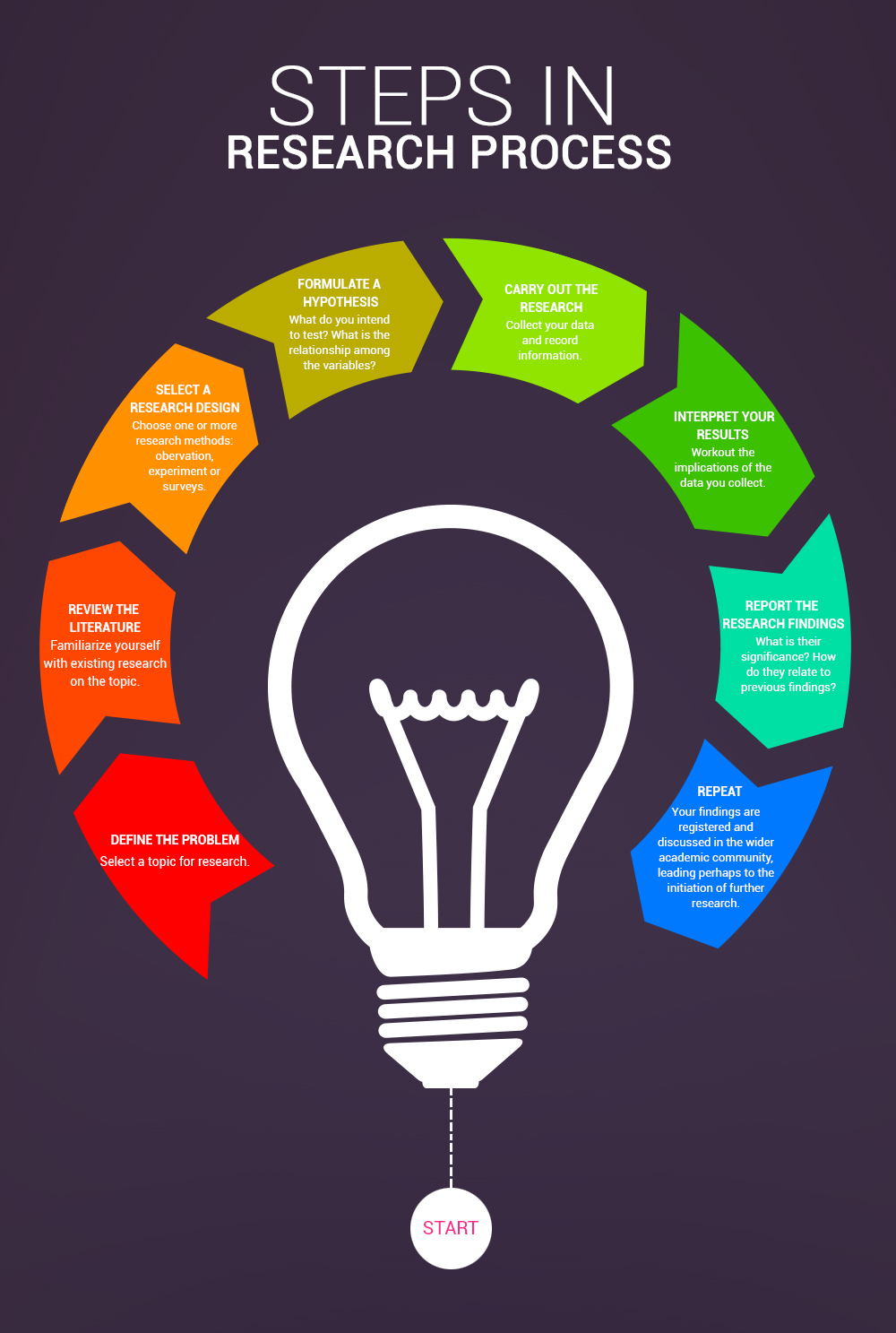
Steps in the developing research (or, how to get to research outputs). COURTESY: Visual.ly


NOTES:
[1] Some examples include:
a) Slack inside the MacArthur Lab. SlackHQ blog, April 27 (2015).

b) Washietl, S. (2016). Six ways to streamline communication in your research group using Slack. Paperpile blog, April 12.

c) Perkel, J.M. (2016). How Scientists Use Slack. Nature News, 541, 123. Managing organizational to-do lists in Slack.

[2] OpenWorm Slack has a bi-weeky event called Office Hours where people meet and have topical conversations. Join us via Slack Pass if you are interested.

[3] Foster, E. and Deardorff, A. (2017). Open Science Framework (OSF). Journal of the Medical Library Association: JMLA, 105(2), 203-206.

[4] Anonymous (2016). Response from COS. Medium, April 2.

September 11, 2017

This Concludes This Version of Google Summer of Code


I am happy to announce that the DevoWorm group's first Google Summer of Code student has successfully completed his project! Congrats to Siddharth Yadav from IIT-New Delhi, who completed his project "Image Processing with ImageJ (segmentation of high-resolution images)".

Our intrepid student intern

His project completion video is located on the DevoWorm YouTube channel. This serves as a counterpart to his "Hello World" video at the beginning of the project. The official project repo is located here. Not only did Siddharth contribute to the data science efforts of DevoWorm but also contributed to the OpenWorm Foundation's public relations committee.

Screenshot from project completion video

As you will see from the video, a successful project proceeds by organizing work around a timeline, and then modifying that timeline as roeadblocks and practical considerations are taken into account. This approach resulted in a tool that can be used by a diverse research community immediately for data extraction, or build upon in the form of future projects. 

In terms of general advice for future students, communicate potential problems early and often. If you get hung up on a problem, put it aside for awhile and work on another part of the project. As a mentor, I encourage students to follow up on methods and areas of research that is most successful in their hands [1]. In this way, students can find and build upon their strengths, while also achieving some level of immediate success. 


NOTES:
[1] This seems like a good place to plug the Orthogonal Research Lab's Open Career Development project. In particular, check out our laboratory contribution philosophy.

August 25, 2017

Live streaming of Orthogonal Lab content

Research live-streaming: an experiment in content [1].

The Orthogonal Research Laboratory, in conjunction with the OpenWorm Foundation, is starting to experiment with live video content. We are using YouTube Live, and live streams (composed in Xsplit Broadcaster) will be archived on the Orthogonal Lab YouTube channel. The intial forays into content will focus on research advances and collaborative meetings, but ideas for content are welcome. 


NOTES:

[1] obscure reference of the post: a shot of Felix the Cat, whose likeness was used to calibrate early experimental television broadcasts.

July 26, 2017

Battle of the (Worm) Bots


There is an fledgling initiative at the OpenWorm Foundation to build a worm robot. This post highlights some of the first steps towards this goal. OpenWorm Robots will be useful for educational purposes and movement experiments/validation. No soft robotics (or miniaturization) yet, but progress is also continually being made on the brains behind the bot. More videos are forthcoming, so stay tuned. Thanks go to Dr. Tom Portegys and Shane Gingell for their efforts.


This is the latest version of the OpenWorm bot, as shown on the OpenWorm YouTube channel.


This is Shane's first iteration, called RoboWorm. Note the sinusoidal movement, and then compare to a biological C. elegans.

Printfriendly