Showing posts with label evo-sociobiology. Show all posts

October 31, 2014

Introducing the Evolution of Inequality Project

The study of income and resource inequality has been the academic topic du jour this year, highlighted by Thomas Piketty's economic history opus [1] and a special issue of Science [2]. There was even a paper on the 1% vs. the 99% of academic publishing [3] which argues that in terms of citations, the rich tend to get richer. But how do these patterns emerge and evolve? Is it a merely a statistical artifact, or a reflection of how complex, hierarchical societies tend to evolve? For example, we might assume that extreme inequality is maladaptive. But upon simulating a range of artificial societies of different population sizes, initial degrees of stratification, and behavioral features, we might find that extreme inequality tends to occur under specific conditions.


This is the motivating factor for my interest in the topic. Unlike many of the more well-versed approaches to the topic, an alternative view of inequality is a cross between statistical distributions, nuanced views of human sociobiology, and the aftermath of social change. While most economists have taken a materialist view of inequality, I feel that evolutionary perspectives would be helpful in teasing out questions of inequality's origins. This might involve data as diverse as historical data, ethnographic data, evolutionary modeling, and behavioral/neurophysiological data. In the end, we will be able to provide a conceptual alternative to the usual discussion at the intersection of behavior, biology, and social change. An inclusive, multidisciplinary approach is a core component of this project.

My research organization (Orthogonal Research) is trying to initiate work on a project called "The Evolution of Value and Inequality". This project is an attempt to understand the emergence of these social inequalities as a set of evolutionary and biobehavioral phenomena. While the argument can be made that an evolutionary perspective might be helpful in understanding unequal allocations of resources, it is sorely lacking in the general discussion. The broadness of the initiative is necessary to make the connection between the pure inferential approach of evolutionary science coherent public policy outcomes. An initial grant application to the Washington Center for Equitable Growth (submitted January 2014) did not get funded, one reason being that the idea needed more conceptual and empirical fleshing out.


So upon doing some more conceptual refinement, I just finished submitting a second version of this proposal to the Institute for New Economic Thinking (INET). While I will not get into the technical details here, the basic idea is to construct adaptive computational models that mimic a social hierarchy (so-called hierarchical network models). Each node of these directed graphs are informed in their behavior by neuroimaging and other physiological sources of data on human behavior.

The project is focused around evolutionary models of social change (social and cultural change), the underlying assumptions of which can be verified by the collection of biobehavioral data (e.g. neuroimaging experiments). The empirical component is meant to test assumptions of individual and social behavior, and serves as an alternative to the rational expectations assumption that dominates much of conventional economics. However, it also refines many of the model-free findings that
characterize behavioral economics [4].

The evolutionary aspects of this work are also quite interesting. Because we are bridging the short-term (behavioral) and the longer-term (social evolution), there are at least three forms of adaptation: a social learning mechanism, a cultural evolutionary form of selection, and a neurophysiological imperative that satisfies various material, social, and existential needs of an individual. This gives us a fitness and selection criterion that is tangentially related to reproductive success. Subsequent evolutionary algorithms and simulations may bear out the evolutionary dynamics of value construction and social stratification.

Another contribution of this project is to link the statistical aspects of inequality with an evolutionary and demographic framework. The oft-referenced phrase the "1%" or the "0.01%" has its roots in an exponential (non-normal) statistical distribution called the power law. Power laws of various size tend to describe observed income distributions in many different types of society. As inequality increases sharply in a single society, or as different degrees of inequality are observed in different contexts, the power law and in conjunction with various stable states can be used as selection criteria.

Schematic of expected results. Both the C and L parameters refer to operations on intra- and bi-level hierarchical networks dynamics, respectively.

As proposed in the first part of this post, the resulting evolutionary algorithms and experimental inquiries provide us with a possibility space for given outcomes. Given a set of initial conditions, we can observe the tendencies of inequality of resource allocation. If there are common outcomes relative to a number of different initial conditions, this could tell us something cross-cultural and fundamental about the nature of inequality. Ultimately, the outcomes of this project could help to identify and predict opportunities to head off crises and as an architecture for achieving sustainable economic growth.

NOTES:
[1] Piketty, T.   Capital in the 21rst Century. Harvard University Press (2014).

[2] Citation for the special issue: Science, 344, May 23 (2014). One article with particular relevance to social evolution is: Pringle, H.    The Ancient Roots of the 1%. Science, 344, 822-825 (2014).

[3] Ioannidis JPA, Boyack KW, Klavans R.   Estimates of the Continuously Publishing Core in the Scientific Workforce. PLoS One, 9(7), e101698. doi:10.1371/journal.pone.0101698 (2014).

[4] Camerer, C.F. and Loewenstein, G.   Behavioral Economics: past, present, future. In "Advances in Behavioral Economics". C.F. Camerer, G. Loewenstein, and M. Rabin eds. Chapter 1. Russell Sage Foundation (2004).

Behavioral Economics Reading List. Russell Sage Foundation blog, March 23 (2012).

August 22, 2014

Six Degrees of the Alpha Male: breeding networks to understand population structure

This post is part of a continuing series on ways to think more deeply about human biological diversity. In last month's post (One Evolutionary Trajectory, Many Processes), I discussed how dual-process models (such as the DIT model) might be used to include a new dimension to more traditional studies of population genetics. This example did not spend too much time on the specifics of what such a model would look like. Nevertheless, a dual-process model provides a broader view of the evolutionary process, particularly for highly social (and cultural) species like humans.


In this post, I will lay out another idea briefly mentioned in the "Long Game of Human Biological Variation" post. This involves the use of complex network theory to model the nature of structure in populations. To review, the null hypothesis (e.g. no structure) is generally modeled using an assumption of panmixia [1]. In this conception, structure emerges from interactions between individuals and demes (semi-isolated breeding populations). Thus, a deviation from the null model involves the generation of structure via selective breeding, reproductive isolation, or some other mechanism.

One way to view these types of population dynamics is to use a population genetics model such as the one I just described. However, we can also use complex network theory to better understand how populations evolve, particularly when populations are suspected to deviate from the null expectation [2]. Complex networks provide us with a means to statistically characterize the interactions between individual organisms, in addition to rigorously characterizing sexual selection and the long-range effects of mating patterns.

An example of a small-world network with extensive weak ties. Importantly, this network topology is not random, but instead feature shortcuts and extensive structure. Data represents the human brain. COURTESY: Reference [3].

Since attending the Network Frontiers Workshop (Northwestern University) last December, I have been toying around with a new approach called "breeding networks". The breeding network concept [2] involves using multilayered, dynamical networks to characterize breeding events, the creation of offspring, the subsequent breeding events for those offspring, and macro-scale population patterns that result. This allows us to characterize a number of parameters in one model, such as the effects of animal social networks on population dynamics [4]. This includes traditional network statistics (e.g. connectivity and modularity parameters) that translate into theoretical measures of fecundity, the diffusion of genotypic markers within a population, and structural independence between demic populations. But these statistics are determined by a meta-process, one that is explicitly social and behavioral.

Before we continue, it is worth asking why complex networks are relevant. No doubt you have heard of the "small-world network" phenomenon, which postulates that given a certain type of network topology, networks with many nodes and connections can be traversed in a very small number of steps [5]. This is the famous "six degrees" phenomenon in action. But complex networks can range from random connectivity to various degrees of concentration. This approach, which comes with its own mathematical formalisms, allows us to neatly characterize the behavior, physiology, and other non-genetic factors that result in the population dynamics that produces structured genetic variation.

An example of regular, small-world, and random networks, ordered by to what extent their connectivity is determined by random processes [6]. In breeding networks, non-random connectivity is determined by sexual selection (e.g. selective breeding). As sexual selection increases or decreases, it can change the connectivity of a population.

As complex networks are made up of nodes and connections, the connections themselves are subject to
connection rules. In some networks, these rules can be observed as laws of preferential attachment [7].
But in general, each node or class of nodes can have simple rules for preferring (or ignoring) association with one node over another. If this sounds like an informal selection rule, this is no accident. While complex network theory does not approach connectivity rules in such a way, breeding networks are expected to be influenced by sexual selection at a very fundamental (e.g. dyadic interaction) level.

The complex network zoo, and the three parameters (heterogeneity, randomness, and modularity) that define the connectivity of a network topology. Examples of specific network types are given in the three-dimensional example above, but breeding networks could fall anywhere within this space. COURTESY: Reference [8].

Another feature of breeding networks involves connectivity trends over time. For example, a founder population with a small effective population size might indeed be panmictic (in this case represented by a random network topology). However, as the population size increases and connectivity rules change, this topology can evolve to one with scale-free or even small-world properties. This is not only due to the selective nature of producing offspring, but difference in the fecundity of individual nodes.

Once you start paying around with this basic model, a number of alternative network structures [9] can be used to represent the null model. Types of configuration such as star topologies, hyperbolic trees, and cactus graphs can approximate inherent geographic structure in a population's distribution. These alternative graph topologies are the product of factors such as geography or migration, and may have pre-existing structure. The key is to use these features as the null hypothesis as appropriate. This will provide us with a better accounting of the true complexity involved in shaping the structural features of an evolving population.


A map showing the seasonal migration of shark populations in the Pacific, including aggregation points. COURTESY: The Fisheries' Blog.

NOTES:
[1] One model organism for understanding local and global panmixia is the aquatic parasite Lecithochirium fusiforme. For more, please see: Criscione, C.D., Vilas, R., Paniagua, E., and Blouin, M.S.   More than meets the eye: detecting cryptic microgeographic population structure in a parasite with a complex life cycle.
Molecular Ecology, 20(12), 2510-2524 (2011).

[2] The idea of breeding networks is similar to the idea of sexual networks, except that breeding networks are more explicitly tied to population genetics. This paper give good insight into how sexual selection factor into the formation of structured, complex networks: McDonald, G.C., James, R., Krause, J., and Pizzari, T.   Sexual networks: measuring sexual selection in structured, polyandrous populations. Proceedings of the Royal Societiy B, 368, 20120356 (2013).

[3] Gallos, L.K., Makse, H.A., and Sigman, M.   A small world of weak ties provides optimal global integration of self-similar modules in functional brain networks. PNAS, 109(8), 2825-2830 (2012).

[4] For more on animal social networks and their relationship to evolution, please see the following references:

a) Oh, K.P. and Badyaev, A.V.   Structure of social networks in a passerine bird: consequences for sexual selection and the evolution of mating strategies. American Naturalist, 176(3), E80-89 (2010).

b) Kurvers, R.H.J.M., Krause, J., Croft, D.P., Wilson, A.D.M., Wolf, M.   The evolutionary and ecological consequences of animal social networks: emerging issues. Trends in Ecology and Evolution, 29(6), 326–335 (2014).

[5] For a definition of network diameter in context, please see: Porter, M.A.   Small-world Network. Scholarpedia, 7(2), 1739 (2012).

[6] This classification of idealized graph models is based on the Watts-Strogatz model of complex networks. For more information, please see: Watts, D.J. and Strogatz, S.H.   Collective dynamics of 'small-world' networks. Nature, 393, 440-442 (1998).

[7] This property of idealized graph models is based on the Barabasi-Albert model of complex networks. For more information, please see: Barabasi, A-L. and Albert, R.   Emergence of scaling in random networks. Science, 286(5439), 509–512 (1999).

[8] Sole, R.V. and Valverde, S.   Information Theory of Complex Networks: On Evolution and Architectural Constraints, Lecture Notes in Physics, 650, 189–207 (2004).

[9] Oikonomou, P. and Cluzel, P.   Effects of topology on network evolution. Nature Physics 2, 532-536 (2006).

July 25, 2014

One Evolutionary Trajectory, Many Processes

Two months ago, I wrote a post on how we might think more deeply about human biological variation. This post also involved a discussion about the recent Nicholas Wade book (A Troublesome Inheritance), which has engendered its own rancor on the internet [1]. In the second part of the post, I discussed some potential ways we can more effectively model human variation. This was decidedly exploratory, the intent of which was to follow-up on the discussion. In this post, I will discuss the need for taking cultural evolution and other factors into account when interpreting genetic variation.


To understand where I am coming from here, consider the difference between population genetics and behavioral ecology approaches. In population genetics, the concern is over observing the patterns of standing variation in a population. We discuss topics such as allele frequencies, admixture, and the mechanisms of genetic differentiation. But populations also behave, and in behavioral ecology topics such as sexual selection, foraging patterns, and strategic behaviors are also taken into account.

While there is indeed implicit overlap between these two fields in the literature, there is little direct theoretical synthesis in this direction. For example, if one takes species concepts into account [2], we can see the issue rear its head: one can apply a host of species concepts which explain both the behavioral and genealogical dynamics of a population, but a unified conceptual framework (e.g. one that is not contradictory) is elusive.

Yet even when only taking behavioral dynamics into account, there are a multitude of factors that make direct comparisons between populations difficult. Species differ in both their sociality and acquisition of culture. This differentiation is even more profound in terms of how culture has shaped a species' ability to adaptively radiate and persist over multiple generations. Humans are not only an intensely eusocial species, but also fall into the latter category of being shaped by culture as much as by environmental selection.

One might simply refer to this as "cultural selection", but a better approach is to model the process of genealogical and cultural (or social) evolution as nominally separate but interrelated processes. In "Playing the Long Game of Human Biological Variation", I advocated for the use of dual process models. Such models treat the same population as being subject to two or more distinct processes simultaneously. In a Synthetic Daisies post re-published at Humanity+ [3], I introduced a dual process Artificial Life-based model that integrates genealogical dynamics and biogeographic processes (specifically changes in geomorphology).


There are a good number of examples of dual process models in the literature which integrate cultural and biological evolution. A good starting point is the work of Richerson, Boyd, McElreath, and Henrich [4, 5], who use a dual inheritance model (DIT) with similar genetical and cultural inheritance mechanisms. While this does not distinguish between the mode transmission for genetical units (genealogy) and cultural units (social learning), it does allow for their dynamics to differ within a population.

This provides us with a conceptual expression of "nature" not being equivalent to "nurture", even though we end up in a place similar to the species concept example. But this does not necessarily solve a key issue; namely, that culture and genetics do not simply have the potential to follow divergent trajectories. Culture might also provide a coherent and context-dependent evolutionary constraint [6] which can influence "fast" human evolution [7]. Specifically, culture might influence genetic evolution indirectly through evolutionary constraints (EC) on admixture, migration, local environmental genetic polymorphisms, and demographic fluctuations [8].

One example of a dual process model (in this case, an example from niche construction). COURTESY: Niche Construction page, Semiotics Encyclopedia Online.

Notice that this is quite a bit different than claims of genetics influencing cultural evolution, or culture acting as a multiplier of genetic differences. In fact, the effect is not a feedback or other type of causal mechanism at all, but rather an incongruence [9]. Evolutionary incongruence (EI) occurs when the evolutionary trajectory of the genome and the cultural environment do not lead in the same direction [8].

For example, even though you might possess a genotype that makes you very unfit for a certain environment, possessing a cultural adaptation on top of this genotype might make you fit enough (or even very fit). EI and EC can also determine more general outcomes in a dual process model. In the case of humans, where culture enables humans to survive in environments beyond what is enabled by genes alone, EI is much more dominant than EC. You can still find genetic variants that result from adaptation to a specific local environment, but they are not the determining factor in survival. In a very different context, for example in the case of a solitary species, EC might dominate over EI.

In summary, accounting for variation within and between human groups might best be done using a sophisticated theoretical framework. This framework includes 1) the use of a dual process model that represents cultural and genetic evolutionary processes, and 2) the identification of how culture contributes to genetic variation, namely either through constraint (which enables feedback between genes and culture) or incongruence (where the variation contributed by genetic and cultural evolutionary processes point in different directions). In the case of eusocial species that possess culture (example: Homo sapiens), incoherence will be predominant, although constraint can drive forward local genetic adaptation when needed.

 Examples of eusocial (left) and solitary (right) species.

In a future post, I will explore another theme in the original "Long Game" blog post, namely the idea that panmixia might not be the best way to assess the absence of population subdivision. Instead of using a traditional population genetics model, using scale-free networks to represent the null hypothesis might give us a more profound theory and more realistic results. Look forward to it.

NOTES:
[1] I'm not particularly interested in ideological debates. But be aware that this post will be largely theoretical and perhaps a bit too speculative. That's the way theoretical advances are made!

[2] Wheeler, Q. and Meier, R.   Species Concepts and Phylogenetic Theory: a debate. Columbia University Press (2000).

[3] Alicea, B.   Artificial Life meets Geodynamics (EvoGeo). Humanity+ Magazine, December 7 (2012).

[4] Richerson, P.J. and Boyd, R.   Not By Genes Alone: How Culture Transformed Human Evolution. University of Chicago Press (2005).

[5] McElreath, R. and Henrich, J.   Dual inheritance theory: the evolution of human cultural capacities and cultural evolution. In "Oxford Handbook of Evolutionary Psychology", R. Dunbar and L. Barrett eds., Oxford University Press (2007).

[6] Boyd, R. and Richerson, P.   The cultural transmission of acquired variation: effects on genetic fitness. Journal of Theoretical Biology, 100, 567-596 (1983).

[7]  Hawks, J., Wang, E.T., Cochran, G.M., Harpending, H.C., and Moyzis, R.K.   Recent acceleration of human adaptive evolution. PNAS, 104(52), 20753–20758 (2007).

[8] NOTE: The terms and abbreviations for evolutionary constraint (EC) and evolutionary incongruence (EI) are of my own coinage.

[9] Laland K. and Brown, G.   Sense and Nonsense: Evolutionary Perspectives on Human Behavior. Oxford: Oxford University Press (2002).


July 21, 2014

Four Readings and an Open Science Argument

Here are some papers from my reading queue. Four readings on human culture, behavior, and evolution, and one feature (set of readings) on Open Science. 

Four Readings......

Here are four readings from the reading queue on human culture, behavior, and evolution. The picture below (only tangentially related to the first paper) is from [1].


The first paper [2] is on the genetic architecture of economic and political preferences. Using a SNP analysis, the authors demonstrate that such traits have a polygenicarchitecture (e.g. many genes, small effect size for each). Studies that are underpowered (and no one really knows what the appropriate sample sizes should be) can potentially generate many false positive associations between genes and behavior. Nevertheless, understanding the presence of key variants for social preferences might help us understand why some people seem to be inherently "liberal" or "conservative".

The second paper [3] presents us with a premise that equates (or perhaps confounds) the psychophysiology of political ideologies with the roots of more general ideological bias. Are we really looking at "natural" differences between liberals and conservatives? Or does this simply demonstrate that high-profile social issues with already polar liberal and conservative positions [4] are undergirded by strong emotional responses? The standard evolutionary psychology explanation is a bit contrived as well. But it goes well with the previous article.


Crossmodal and cross-cultural comparisons, unite! In this study [5], people from several different cultures were asked to make both "congruent" and "incongruent" associations between smells and colors. The authors come to the conclusion that cultural context through experience has both statistical (covariance) and semantic (linguistic) components.

The fourth article [6] is a gateway article to several recent studies in the area of neuroplasticity. The gateway leads to the work being done in the laboratory of Michael Stryker [7]. Learn about the "neural volume control knob" and much, much more.


.....And An Open Science Argument


Here are some additional readings on networking and open science from my reading queue. The first is a paper on the life-cycle of a preprint on the arXiv [8] The top image is Figure 2 in the paper. The other two readings advocate for the use of open access protocols and social media to disseminate research [9] and counter cultural biases towards keeping research behind laboratory doors [10].


NOTES:

[2] Benjamin, D.J. et.al    The genetic architecture of economic and political preferences. PNAS, 10:1073/ pnas.1120666109 (2014).


[4] Related to this is the concept of the news filter bubble. One recent paper on this phenomenon: Koutra, D., Bennett, P., and Horvitz, E.   Events and Controversies: influences of a shocking news event on information seeking. arXiv, 1405.1486 (2014).

[5] Ren et.al   Cross-Cultural Color-Odor Associations. PLoS One, 9(7), e101651 (2014).

[6] Stix, G.   Neuroplasticity: new clues to just how much the adult brain can change. Scientific American blog, July 14 (2014).

[7] Two notable publications:
a) Fu, Y., Tucciarone, J.M., Espinosa, S., Sheng, N., Darcy, D.P., Nicoll, R.A., Huang, J., and Stryker, M.P.   A Cortical Circuit for Gain Control by Behavioral State. Cell, 156, 1139–1152 (2014).

b) Niell, C.M. and Stryker, M.P.   Modulation of Visual Responses by Behavioral State in Mouse Visual Cortex. Neuron, 65, 472-479 (2010).

[8] Shuai, X., Pepe, A., and Bollen, J.   How the Scientific Community Reacts to Newly Submitted Preprints: Article Downloads, Twitter Mentions, and Citations. PLoS One, 7(11), e47523 (2012).

[9] Allen , E.   “All research should be OA”. We agree! ScienceOpen blog, July 14 (2014).

[10] Konkiel, S.   How to become an academic networking pro on LinkedIn. ImpactStory blog, April 24 (2014).

May 27, 2014

Playing the Long Game of Human Biological Variation

This post is presented in two parts: an epistomological discussion (I) and a technical one (II). Hopefully this will be informative.

I: Biological Variation: an epistomological tour
This month was a provocative one for those interested in human biological variation. Nicholas Wade's book "A Troublesome Inheritance: genes, race, and human history" is being roundly criticized by Anthropologists [1] and Evolutionary Biologists [2] alike. While I have not read the book, I have gleaned the basic outline from various reviews and recaps. But from what I understand about it, the book is based on the notion that the study of human biological variation has not been treated fairly in the history of science. That is to say, people who are satisfied with the phrases "there are no such thing as race" or "races are sociopolitical entities" [3] are ignoring up-and-coming work in the area of human genetics. And indeed, recent findings based on technologies such as genome resequencing and functional genomics might suggest a interpretive revision is necessary.

As Wade would have it, this research suggests that human subdivision is a real phenomenon, much like species or other biological classifications. This in and of itself would be an incomplete argument. But the way in which Wade links human genetic diversity to behavioral differences and confounds racial categories with cultural groups is a source of great controversy. In fact, a book review by Andrew Gelman [4] highlights both the preposterous and plausible nature of Wade's argument. The preposterousness of Wade's argument lies in its extramission theory-like reliance on genes enabling behavioral tendencies based on cultural identity. The plausibility lies in the recognition of population sub- structure, which will be discussed later in this post.

Spatial distribution of a single human phenotypic trait (skin color). Is there any significance to these geographic patterns, and how can we tell? Some people think a map like this contains self-evident truths, others do not.

My impression of Wade's argument boils down to this: the argument against human population subdivision (racial classification) is largely driven by political correctness, and all we need to do is apply the right science to see the truth. There is a circularity and self- evident quality to this argument that is somewhat disturbing. Unfortunately for Wade, he uses precious little insight from either Population Genetics nor modern Evolutionary Anthropology. So the Evolutionary Anthropology/Biology critique is not merely based on enforcing conformity, it is substantive and necessary. And as we will later see, the interpretation of human biological variation is much more complicated than many people will admit to.

I would be remiss to say that Wade is not without his supporters [5]. A more cynical eye might label him (Wade) and these supporters as "scientific racists" or "deniers" (the denier label has also been applied to Anthropologists by a likely Wade supporter). But the real problem is the dialogue between different scientific research group and fields of study. In the study of variation and its consequences, what is obvious to a person in one field might take someone in another field completely by surprise. People who are unfamiliar with nuanced variation-dependent thinking are more likely to embrace the notion that there is something fishy about these ways to deal with variation and instead choose a so-called common sense approach. But because science is so (unnecessarily) hyper-specialized, perhaps we should not expect an full accounting of variation from any one group or field. Instead perhaps we should play the long game of interpreting variation.

II. How do we approach human structural variation?
The debate between Agustin Fuentes and Nicholas Wade [6] operationalizes this gap in understanding in two ways. First, Wade sets up a straw man in declaring that the standard Anthropological view only considers races as socio-political categories rather than biological ones. But since biological differences between human populations are self-evident (albeit at a superficial level) and consistent with so-called common sense, this view must be erroneous (or at least severely flawed). Yet this is a conceptual assumption on Wade's part -- racial categories are often based on superficial biological attributes, but rooted in social context and the fluid nature of identity over time. This is the essence of the Anthropological lesson:  biological features and social context often cannot be disentangled. Secondly, Wade uses an example of several geographically- distinct "natural" groups being generated by a program called Structure [7]. One might think that a statistical argument would supercede any conceptual arguments that might be rooted in ideology. But as I will show you, so-called racial categories cannot be easily statistically disentangled from other structural features of human populations, either.

This is what a cluster analysis with structure looks like (a generic example). Considering that this is an unsupervised form of machine learning and a rather exploratory form of data analysis, should this be the standard tool for the analysis of human genomic variation? COURTESY: R and Bioconductor manual.

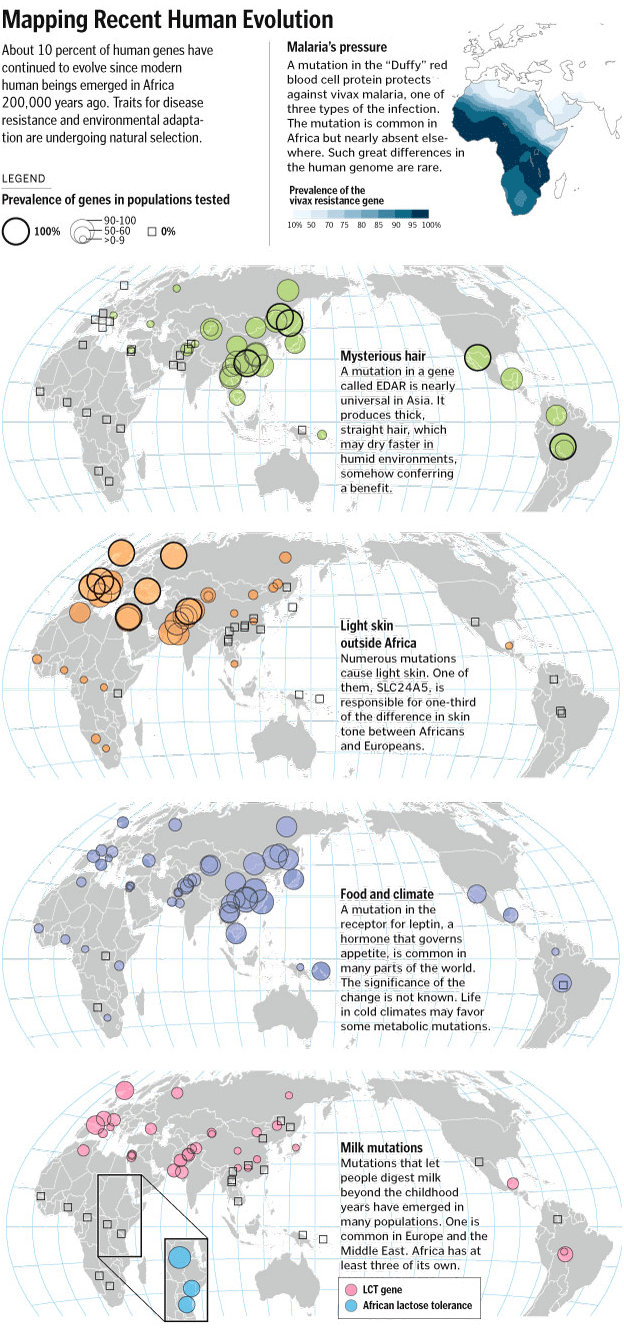
So is Wade's argument typical of contemporary thinking on human biological variation? We can look to research groups located at Stanford (Pritchard Lab), Chicago (Lahn Lab) [8], and UC Santa Cruz (Haussler Lab) for instructive lessons. These groups have found both structured variation and intriguing differences between populations, but unlike Wade do not associate it with broad cultural characterizations. Their hypothesis is that natural selection has acted extensively on modern human populations, owing largely to regional environmental adaptation [9]. This has included adaptations for lactose tolerance and the discovery of human accelerated regions (HARs) [10]. Indeed, there is accumulating evidence that evolutionary adaptation has occurred on a regional basis in modern humans even within the last 10,000 years (e.g. fast evolutionary change). This has resulted in regional distinctions between populations [11], but whether these demographic changes warrant formal taxonomic distinction is another matter.

 A standard PCA analysis shows that genotype can predict geographic origin of genotype. COURTESY: Gene expression blog.

Indeed, while these differences may serve to support the existence of biological races [12], it is unclear how these are precisely defined. Should it be based on the geographic distribution of variation [13], or should it be based on genealogical continuity? So even when we are not dealing with the naive theories of Wade, traditional taxonomic views of race are still problematic when dealing with the complexity of intraspecific variation. What kinds of lessons can we learn from all of this? I will now propose several points that suggest how we might address human variation in an informed manner that incorporates multiple points of view.

 Map showing selected examples of recent human evolution. COURTESY: Washington Post.

1. Geography does not equal natural subdivision.
In all of the reviews of Wade's book, it has never been mentioned why cluster analyses might not be the best way to uncover the true structure of intraspecific variation. So why is it incorrect to look for "natural subdivisions" using a cluster analysis? Because what Wade and others claim to be "natural" subdivisions of genetic diversity may actually be geographic artifacts.

In the Fuentes/Wade debate and in a blog post by Jennifer Raff [14], it is mentioned that a series of experiments can be conducted using k-means cluster analysis. The Structure program provides a k-means-like cluster analysis (or perhaps more accurately, a k-class cluster analysis) with corrections for the effects of admixture between groups [15]. k-means cluster analysis is, of course, a method for specifying the structure of a dataset a priori. In this type of supervised cluster analysis, the number of categories (of order k) should correspond to the number of actual sub-categories (or structure) in the data. Quite telling is that when the value for k is set above 5, the analysis produces clusters which are not geographically mixed (e.g. European and Asian populations in the same group).

One way to correct for this bias is to perform a spatial decorrelation (e.g. spatial PCA) [16]. This would result in removing the similarity of individuals due to shared location [17]. This may seem counterintuitive at first, but consider why this might be important. While a race might be defined by singular traits (e.g. eye color or skin color), these are not robust enough to constitute meaningful population structure in and of themselves. If biological subdivisions do indeed exist, then we would want a classificatory scheme that includes as many traits (e.g. dimensions) as possible without picking up the consequences of traits being co-located in space.

2. Allele frequencies are not dynamic information in and of themselves
Another issue is that even though population structure exists among Homo sapiens, contemporary data are merely a static snapshot of our species. And in a cultural species such as Homo sapiens, the extensive populations bottlenecks that define migration events and ethnogenesis play a large role in defining structure. These structural features have the potential to mimic more systematic gene flow restriction and racial group-specific evolution. Any hypothesis of systematic population structure in humans must also consider alternative explanations such as these.

An Analysis of Molecular Variance (AMOVA) [18] should generally reveal that there is more variation within than between many continental level subdivisions of Homo sapiens. Thus, there is no reason to believe that races (if they exist) have to be geographically distinct any more than continental groups being homogeneous. But perhaps they do not exist, and do not serve as a stable and reliable taxonomic category. A paper by Long and Kittles [19] considers four different race concepts based on patterns of the genetic fixation parameter Fst: typological, population, taxonomic, and lineage. While the measurement of allele frequencies reveal more variation than expected using Fst, these data are still not consistent with formal taxonomic (e.g. racial) subdivisions.

3. Environment is both the problem and the solution
A third issue involves the role of GxE, or the interaction of genes and environment. While there are of course formal GxE tests in modern genetics, my purpose here is to point out what is perhaps the true role of environmental influences on variation. To understand this, we must return to the standard Anthropological position on race. Paraphrased, this position states that in the scheme of history races are sociopolitical entities, the biological significance of which are diluted by the nature of identity. So as we can see, environment actually involves explicitly cultural adaptation with its own structural features. This may give rise to an additional term: GxExC.

This cultural variance, unlike the environmental variance found in other mammals such as foxes or hedgehogs, can be substantial. But does culture act as a multiplier of genetic effects, or as a buffer from genetic effects? It really does depend on both the social and biological context. On the one hand, culture has allowed populations to adapt to new environments without the need for genomic adaptation. On the other hand, environmentally-driven genomic adaptations have allowed for cultural innovation. It may be best to consider this relationship between culture and genome as a dual-process model, the evolution of which can often be independent of any nominal genetic structure.

4. Variation is not straightforward
Finally, there is a question of how you compare groups of equal amounts of variation and keep behavioral influences on migration and other factors [20] to a minimum. If you are looking to not compare apples and oranges [21], one must keep this issue in mind. What type of group is a valid subdivision, particularly for comparative purposes? Is the fundamental level of subdivision continental, or based on ethnic group, or is it simply one of restricted gene flow? Due to their basis in migration and identity, human ethnic groups can be either contrived (e.g. of a polyglot nature) [18] or homogeneous. Even in cases where significant structure exists, the link to broader social relevance (e.g. cultural diversity and traits) is questionable at best [22].

What is the true structure of our species and how does it matter for purposes of classification? One is that even though some interbreeding has been found to occur between modern humans and archaic species, the trend of recent human expansion out of Africa (the RAO model) is still predominant [23]. This suggests that the apparent structure in human genetic data may not be all that deep, pointing towards strong contributions from so-called fast evolution. While fast evolution may be sufficient to drive racial population structure on its own, the nature of changing political boundaries and population patterns make traditional biological classification somewhat superfluous for humans [24].

The tempo and broad overview of human demographic expansion, according to the RAO model.

5. Population genetics + Linnean taxonomy might not be the answer
There are also several problems with the concept of race as a taxonomic (a) and organizational (b) term. Let's look at each of these in more detail.

a) Linnean-style classification below the species level is problematic. As putative sub-categories of a species, races are not defined in the same way as a species. Aside from there being many species definitions, the most popular (the Biological species concept) is based on molecular mechanisms for reproductive isolation and the genesis of dinscontinuous variation. This is true even among populations that evolve in a spatially comingled fashion. However, defining races (and their emergence) using a systematic approach is much trickier, and would presumably involve restricted gene flow within humans. But despite geographic barriers and the local concentration of certain adaptations and traits [25], the assumption that intraspecific structure should necessarily be nested or discrete is likely misguided [24].

b) To assess significant population structure, we often begin from a condition of panmixia. Panmixia is a situation where every member of the species (or population) have an equal chance of breeding with one another. This is often thought of as random assortment, and so restrictions in gene flow will lead to a signature of population subdivision (groups which are called demes). However, consider that
The problem is that we typically use panmixia as the null hypothesis. A more plausible (to me) null model is something like a scale-free or even small-world network, complete with highly-connected populations and weak connectors between populations. This would not only account for all possible configurations of interbreeding relationships (which are heavily influenced by culture) over evolutionary time, but also would account for the dual inheritance and evolutionary processes of culture and biology simultaneously [26].

A scenario for modern human demographic expansion. Notice the role of migrations and population expansions. COURTESY: Figure 1 in [27].

So what does the long game of human biological variation involve? It helps to resist the temptation of approaching the issue from a solely reductionist perspective. While large-scale genetic data give us a formidable advantage in the understanding of human diversity [28], not making the link to social complexity and phenotype makes the technology and the science involved much less useful. But sometimes one source of data can help drive the entire enterprise forward. In Pritchard, Pickrell, and Coop [29], whole-genome data allows them to propose a new mechanism called polygenic adaptation, which allows for rapid adaptation in a population without the need for selective sweeps. While this stands at odds with comparative morphology, physiology, and conventional population genetics, and thus might be incorrect, it also might help us make sense of the big question in a new light. New analytical tools and a unification of theoretical perspectives can also help, particularly in an area where the potential for mythology and biases are rife. Given that "nothing in the study of variation makes sense with complexity" [30], a vision that transcends discipline and investigative approach is absolutely required.


NOTES:
[1] Anthropologists chime in: Fuentes, A.   The Troublesome Ignorance of Nicholas Wade. HuffPo blog, May 19 (2014) AND Marks, J.   The Genes Made Us Do It: the new pseudoscience of racial difference. In These Times, May 12 (2014) AND Dunsworth, H.   If scientists were to make the arbitrary decision that biological race is real, can you think of a positive outcome? Mermaid's Tale blog, May 22 (2014).

[2] Evolutionary Biologists chime in: Orr, H.A.   Stretch Genes. NYTimes Review of Books, June 5 (2014) AND Coyne, J.   New book on race by Nicholas Wade: Professor Ceiling Cat says paws down. Why Evolution is True blog, May 14 (2014) AND Pigliucci, M.   On the Biology of Race. Scientia Salon blog, May 29 (2014) AND Yoder, J.   How A Troublesome Inheritance gets human genetics wrong. The Molecular Ecologist blog, May 29 (2014).

[3] Although this paper serves as a means to make sense of human variation from an Anthropological perspective that goes beyond sloganeering: Weiss, K.M. and Fullerton, S.M.   Racing around, getting nowhere. Evolutionary Anthropology, 14, 165-169 (2005).

[4] Gelman, A.   The Paradox of Racism. Slate Magazine, May 8 (2014).

[5] One take on the relative merits and of Wade's book and support of his argument can be found here: VanBruggen, R.   Race is Real. what Does the Mean for Society? RealClearScience blog, May 6 (2014).

[6] Rex   What Happened at the Fuentes-Wade Webinar. Savage Minds blog, May 14 (2014).

[7] Wade, Nicholas. Gene Study Identifies 5 Main Human Populations, Linking Them to Geography. NY Times, December 20 (2002). But also see this article as a follow-up: Rotimi, C.N.   Are medical and nonmedical uses of large-scale genomic markers conflating genetics and 'race'? Nature Genetics, 36(11), S43-S47 (2004).

[8] For more information, please see the following citations:
a) Raj, A., Stephens, M., Pritchard, J.K.   Variational Inference of Populations Structure in Large SNP Datasets. Genetics, doi:10.1534/genetics.114.164350 (2014).

b) Atkins, C.E.   Bruce Lahn Interview. H+ Magazine, May 12 (2012).

c) Seed Interview: Bruce Lahn. Seed Magazine, September 11 (2006).

[9] McAuliffe, Kathleen. They Don't Make Homo Sapiens Like They Used To: Our species—and individual races—have recently made big evolutionary changes to adjust to new pressures. Discover Magazine, Feb. 2, 2009.

[10] Pollard, K.S., Salama, S.R., King, B., Kern, A.D., Dreszer, T., Katzman, S., Siepel, A., Pedersen, J.S., Bejerano, G., Baertsch, R., Rosenbloom, K.R., Kent, J., and Haussler, D.   Forces shaping the fastest evolving regions in the human genome. PLoS Genetics, 2(10), e168 (2006).

[11] Hsu, Steve. Demography and fast evolution. Information Processing, Aug. 9, 2011.

[12] More biologists chime in: Moran, L.A.   Do Human Races Exist? Sandwalk blog, March 1 (2012) AND Lahn, B.T. and Ebenstein, L. (2009) Let's celebrate human genetic diversity. Nature, 461, 726-728.

[13] For the integration of genealogy and geography, please see: Tishkoff, S.A. and Kidd, K.K. Implications of biogeography of human populations for 'race' and medicine. Nature Genetics, 36(11), S21 - S27 (2004).

Please also see the following reference: The Genographic Project. National Geographic.

[14] Another Anthropologist chimes in: Raff, J.   Nicholas Wade and race: building a scientific facade. Violent Metaphors blog, May 21 (2014).

[15] UPDATED 7/15/2014: If you are wondering as to the technical details of the clustering approach used in Structure, see the following blog post: Pontikos, D.   k-means and Structure. Dienekes' Anthropology Blog, July 15 (2014).

Technically, Structure does not actually use k-means. Instead of using k-unimodal centroids (or assuming normally-distributed categories), the algorithm underlying Structure uses bimodally-determined classes to account for the existence of potential admixture. Again, this is done to correct for artifact due to admixture and other sources of genealogical recombination. However, the issue of potential spatial artifact remains.

[16] Here are two examples of how to treat spatially-dependent data:
a) Spatial PCA: Novembre, J. and Stephens, M.   Interpreting principal component analyses of spatial population genetic variation. Nature Genetics, 40(5), 646-649 (2008).

b) General Classification: Hariharan, B., Malik, J., and Ramanan, D.   Discriminative Decorrelation for Clustering and Classification. Lecture Notes in Computer Science (LNCS), 7575, 459-472 (2012).

[17] Epperson, B.K.   Geographical Genetics. Princeton University Press (2003).

[18] The AMOVA is a relative of the ANOVA (Analysis of Variance). For more information, please see: Excoffier, L., Smouse, P., and Quattro, J.   Analysis of molecular variance inferred from metric distances among DNA haplotypes: Application to human mitochondrial DNA restriction data. Genetics, 131, 479-491 (1992).

[19] Long, J.C. and Kittles, R.A.   Human Genetic Diversity and the Nonexistence of Biological Races. Human Biology, 81(5-6), 777-798 (2009).

[20] Foster, S.A.   The Geography of Behavior: an evolutionary perspective. Trends in Ecology and Evolution, 14(5), 190-195 (1999).

[21] Frost, P.   Apples, Oranges, and Genes. Evo and Proud blog, November 5 (2011).

[22] Khan, R.   Human Races May Have Biological Meaning, But Races Mean Nothing About Humanity. Discover's The Crux blog, May 2 (2012). Please also see the November 2004 supplemental issue of Nature Genetics on human variation for many enlightening articles.


[23] Stringer, C.   Why we are not all multiregionalists now. Trends in Ecology and Evolution, 29(5), 248-251 (2014).

[24] Laden, G.   The Scientific, Political, Social, and Pedagogical Context for the Claim that "Race does not exist". Greg Laden's blog, November 29 (2008).

[25] Novembre, J., Galvani, A.P., and Slatkin, M.   The Geographic Spread of the CCR5 Δ32 HIV-Resistance Allele. PLoS Biology, 3(11), e339 (2005).

[26] Richerson, P.J. and Boyd, R.   Not By Genes Alone: How Culture Transformed Human Evolution. University of Chicago Press (2005).

[27] Balaresque, P.L.   Challenges in human genetic diversity: demographic history and adaptation. Human Molecular Genetics, 16(R2), R134-R139 (2007).

[28]  Tennessen, J.A., O'Connor, T.D., Bamshad, M.J., and Akey, J.M.   The Promise and Limitations of Population Exomics for Human Evolution Studies. Genome Biology, 12, 127 (2011).

[29] Pritchard, J.K., Pickrell, J.K., and Coop, G.   The Genetics of Human Adaptation: hard sweeps, soft sweeps, and polygenic adaptation. Current Biology, 20(4), R208-R215 (2010).

[30] a play on the classic Dobzhansky quote. Dobzhansky's views on the race concept evolved over time from seeing races as biological "clusters" fixed in space to races as "Mendelian populations" . For more, please see: Gannett, L.   Theodosius Dobzhansky and the Genetic Race Concept. Studies in History and Philosophy of Biological and Biomedical Sciences, 44(3), 250-261 (2013).

Printfriendly